
Saudi Vision 2030: Three Pillars, Targets, and Progress After Nine Years (2025 Report)
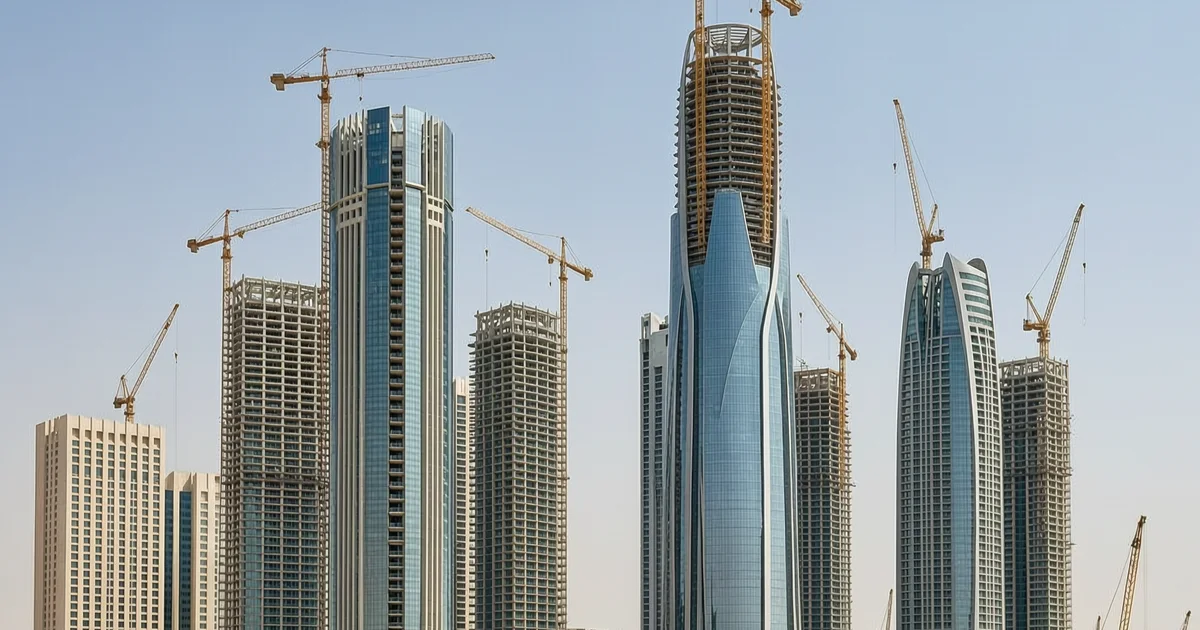
Crown Prince Mohammed bin Salman, Prime Minister, announced in April 2026 that the Kingdom had entered the third and final phase of Saudi Vision 2030, a five-year stretch to 2030 that keeps the long-term goals while adapting execution methods source. The announcement followed the ninth annual report (covering 2024), published on 25 April 2025, which documented achievements since the Vision’s launch on 25 April 2016.
What Is Saudi Vision 2030 and When Was It Announced?
Saudi Vision 2030 is a national plan for economic and social transformation, unveiled on 25 April 2016. It is overseen by the Council of Economic and Development Affairs, chaired by Crown Prince Mohammed bin Salman. The Vision rests on three main pillars that branch into 96 detailed objectives, aiming to diversify the economy away from oil, empower the private sector, and raise quality of life and government efficiency.
What Are the Three Pillars of Vision 2030 and Their Goals?
1. A Vibrant Society
Focuses on a deep-rooted national identity, a life enriched by culture, entertainment and sport, better healthcare services, facilitating service to the Guests of Rahman, and empowering the family. The Saudi Commission for Health Specialties supports this pillar through objectives that include creating an environment to elevate health services, promoting healthy lifestyles, reinforcing Islamic values and national identity, and ensuring environmental sustainability source.
2. A Thriving Economy
Targets diversification of revenue sources, enabling the private sector and SMEs, attracting foreign investment, developing new sectors such as mining, tourism and industry, and raising citizen participation in the labour market. The Commission supports this pillar by deepening the Saudi economy’s integration into the global system, growing the private sector’s contribution, developing human capital, and attracting promising talent source.
3. An Ambitious Nation
Concerns an effective and transparent government, a responsible citizen, and developing volunteer work and the non-profit sector. The Commission supports this pillar by improving government performance, enabling partnerships for social responsibility, and raising the citizen’s sense of responsibility source.
What Key Numerical Targets Were Set in the Original 2016 Vision Document?
| Indicator | Baseline (2016) | Target by 2030 |
|---|---|---|
| Private sector contribution to GDP | 40% | 65% |
| Home ownership | 50% | 70% |
| Women’s labour force participation | 22% | 30% |
| Unemployment rate | 11.6% | 7% |
| Annual capacity for Guests of Rahman | 8 million | 30 million |
Note: Targets may be updated in subsequent programme documents and annual reports; refer to the latest report for the approved target for each indicator.
What Are the Main Vision 2030 Delivery Programmes?
- National Transformation Programme
- Quality of Life Programme: Culture, Entertainment, Sport and Tourism
- Housing Programme
- Human Capability Development Programme
- Public Investment Fund Programme
- Financial Sector Development Programme
- National Industrial Development and Logistics Programme
- Pilgrim Experience Programme
The Vision is executed through these specialised programmes, each with its own indicators and initiatives.
What Did the Vision Achieve According to the 2025 Annual Report (Covering 2024)?
The report was published on 25 April 2025; key highlights source:
- 93% of performance indicators for programmes and national strategies met or exceeded their interim targets (309 of 390 indicators).
- 85% of initiatives were either completed or on track (674 completed, 596 on track out of 1,502 active initiatives).
- Three phases: Phase 1 (laying foundations), Phase 2 (driving delivery), Phase 3 (enhancing sustainability and investing new growth opportunities) — effectively began in 2025.
Al-Nahar coverage added detailed figures from the report:
- Non-oil activities’ contribution: 55% of real GDP.
- Private sector contribution: 51% (versus the 65% target for 2030).
- Foreign direct investment: 133 billion riyals.
- Saudi home ownership: 66.24% (up from 47% in 2016, target 70%).
- Volunteers: 1.7 million.
- Public Investment Fund assets: grew from 720 billion riyals (2016) to about 3.41 trillion riyals by end of 2025.
- Tourism: 123 million visitors in 2025, including 29.3 million international tourists.
- Non-oil exports: record 622.87 billion riyals.
- Overall growth rate: jumped from 1.3% to 4.5% between the 2024 and 2025 reports, due to OPEC+ easing output cuts and continued non-oil expansion.
Pilgrim Experience Programme Indicators for 2025
According to the programme’s annual report submitted to the Deputy Governor of Makkah Region in September 2026 source:
- Received more than 19.5 million Hajj and Umrah pilgrims from outside the Kingdom during 2025.
- Hajj pilgrim satisfaction: 91%; Umrah pilgrim satisfaction: 94%.
- Makkah ranked fifth globally for international visitor arrivals.
- Historical sites and enrichment destinations: over 55 million visits, with 87 sites rehabilitated.
- Volunteers: 184,569.
How to Read These Numbers Fairly
Several caveats apply when reading Vision figures:
- Interim target is not the final target: Achieving 93% of indicators means meeting the year’s or phase’s targets, not reaching all 2030 numbers.
- Some indicators still lag: The report itself notes that 81 of 390 indicators need additional work.
- Targets can shift: The correct comparison is against the target stated in the report itself, not against older figures.
- Official source first: Numbers circulating on social media are sometimes attributed to official bodies without basis; refer to the official report.
Key Figures (2024–2025)
- Indicators meeting interim targets: 93% (309/390) — 2025 Report source
- Initiatives completed or on track: 85% (1,270/1,502) — 2025 Report source
- Non-oil activities’ share of real GDP: 55% — Al-Nahar source
- Private sector contribution: 51% — Al-Nahar source
- Saudi home ownership: 66.24% (2016: 47%) — Al-Nahar source
- Public Investment Fund assets: 3.41 trillion riyals (2016: 720 billion) — Al-Nahar source
- Tourism 2025: 123 million visitors (29.3 million international) — Al-Nahar source
- Non-oil exports: 622.87 billion riyals — Al-Nahar source
- Hajj and Umrah pilgrims from abroad 2025: 19.5 million — Pilgrim Experience Programme source
Bottom Line and What to Watch
The Vision has entered its third and final phase (2025–2030) with strong interim momentum: 93% of indicators on track, private sector above 50%, home ownership nearing 70%, and the Public Investment Fund up 4.7 times. The remaining challenge is converting interim progress into the final 2030 targets — especially unemployment (7% target), women’s participation (30%), and private sector share (65%). Follow the official annual reports on vision2030.gov.sa, and the indicators of the Housing, Quality of Life, Human Capability Development, and Public Investment Fund programmes; they are the main engines for the next phase.