
Vision 2030 Enters Final Phase: 93% of KPIs Hit Targets Amid Fiscal Deficit Challenge
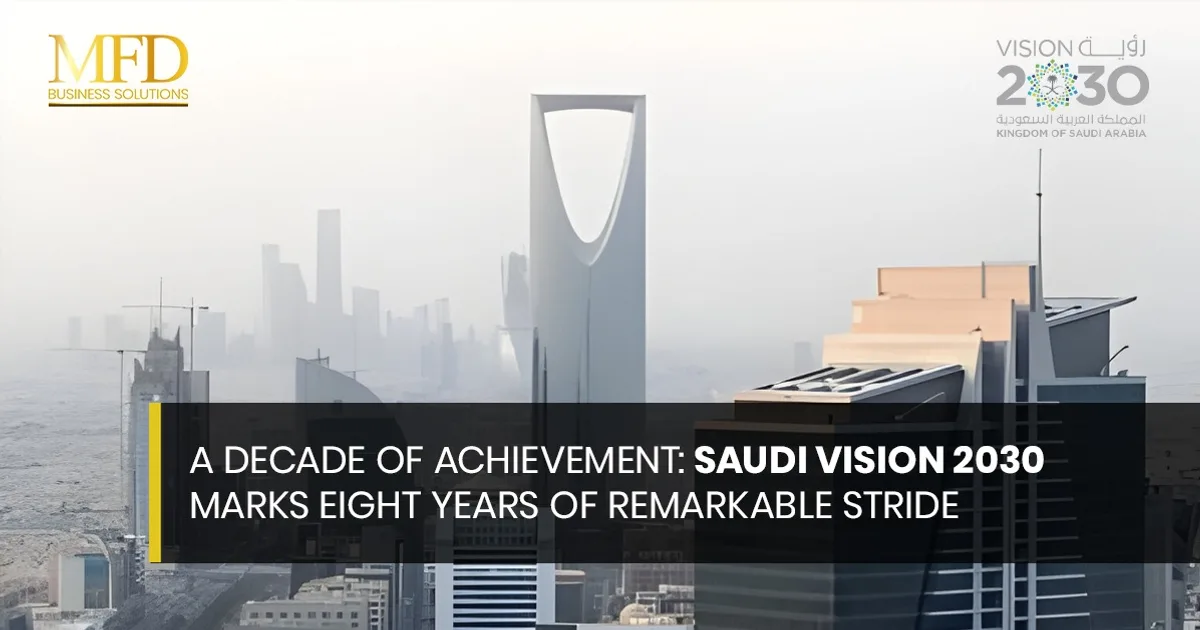
Crown Prince Mohammed bin Salman announced that Saudi Vision 2030 began its third and final phase in 2026, a five-year stretch to 2030 that keeps the long-term goals while adapting execution methods. The Council of Economic and Development Affairs reviewed the updates after the first two phases concluded. (Source: "Vision 2030 in its final phase.. acceleration in achievement and expansion in impact")
What are the three phases of Vision 2030?
The vision set three time-bound phases since its 2016 launch: a foundation and building phase (2016–2021) that reshaped state institutions, launched Vision Realization Programs, and restructured the Public Investment Fund; an acceleration phase (2021–2025) that expanded the private sector’s role and rolled out national strategies; and the current peak execution phase (2026–2030) where capital spending continues alongside sectoral and regional strategies. (Source: Saudi Vision 2030 in its third phase: from achieving numbers to deepening impact...)
What share of KPIs and initiatives hit their targets?
According to the Vision 2030 Annual Report for 2025, 93% of program KPIs met or neared their annual targets, while 90% of the 1,290 active initiatives are on track or completed. The figures reflect a broad execution momentum that has shifted from launching initiatives to maximizing their economic and social impact. (Source: World Petroleum Congress.. Energy Minister: Saudi Arabia proceeds with Vision 2030 under any circumstance - Al Watan Newspaper)
Key economic and social achievements in numbers
- Real GDP: reached SAR 4.9 trillion by end-2025
- Non-oil activity share: rose to 55% of GDP
- Private sector contribution: exceeded 51% of the economy
- Non-oil exports: grew 155% versus 2016, surpassing SAR 623 billion
- Saudi home ownership: reached 66.24% with 850 thousand families moving into their homes
- Tourist arrivals: hit 123 million by end-2025 (the 2030 target was 100 million, then raised to 150 million)
- Public Investment Fund assets: rose from SAR 720 billion (2015) to more than SAR 3.4 trillion
- SMEs: surpassed 1.7 million establishments
- Women’s labor force participation: reached about 35% in 2025 (exceeding the original 30% target)
- Adults practicing sports: share rose to 59.1%
- Life expectancy: reached 79.7 years (2030 target: 80 years)
- Healthcare coverage: services covered 97.5% of population clusters
- Universities in QS rankings: 22 Saudi universities entered the 2025 ranking
- Renewable energy: generation capacity reached 64 GW by end-2025 (from zero in 2016)
- Factories: grew to nearly 13 thousand, up 79% since 2016
- Military industries localization: rose to 24.89% from 7.7% in 2022
- Regional headquarters: more than 700 global companies opened HQs in the Kingdom
- IMD global competitiveness rank: advanced over 20 places to rank 17
- Government AI strategy: ranked first globally
- Digital readiness and cybersecurity: ranked first globally
- Digital government maturity: ranked second globally
- Mining investment attractiveness: among the top 10 countries globally
How has Saudi Arabia’s revenue structure changed?
Non-oil revenues recorded SAR 505 billion in 2025, making up 45% of total state revenue, up from just 27% in 2015, per Al Eqtisadiah’s analysis of budget data—a genuine structural shift in economic diversification. However, Q2 2026 saw oil revenues return to 55% of the total after a jump in oil prices and a 26% output cut to 7.2 million bpd due to regional circumstances, with most oil exported via the East–West pipeline to the Red Sea coast. Revenue therefore still swings with oil markets and regional events.
Main challenges facing the third phase
- Fiscal deficit: The 2026 budget projects spending of SAR 1.31 trillion and revenue of SAR 1.15 trillion, a SAR 165 billion deficit equal to 3.3% of GDP
- Revenue volatility: Reliance on oil prices makes financial planning sensitive to regional crises
- Mega-project timelines: The Council described Red Sea, NEOM, Diriyah Gate, and Qiddiya as long-term projects extending beyond 2030
- Institutional and social sustainability: Need to align the pace of institutional change with society’s capacity to absorb it
What did the Crown Prince say about investing in people?
The Crown Prince stressed that "the most important investment of the Vision since its launch has been, and will remain, focused on the sons and daughters of the nation—qualifying them, developing their performance, raising their efficiency, and placing them in a competitively advanced position with their peers worldwide." He added that current regional events prove long-term planning does not mean rigidity but the ability to adapt, citing the national economy’s flexibility, institutional maturity, and financial sustainability.
What role will the Public Investment Fund play next?
The Fund has begun its five-year strategy, centered on building local economic ecosystems with high competitive capabilities, in pivotal partnership with the private sector, boosting local content to achieve economic transformation, and reaching sustainable financial returns. The National Development Fund also contributes to developing several vital sectors.
Key figures at a glance
- KPI achievement rate: 93% (2025 Annual Report)
- Initiatives on track: 90% of 1,290 initiatives (2025 Annual Report)
- Non-oil share of GDP: 55% (end-2025)
- Private sector contribution: 51%+ (2025)
- Non-oil export growth: 155% since 2016
- Non-oil revenues 2025: SAR 505 billion (45% of total)
- Projected 2026 deficit: SAR 165 billion (3.3% of GDP)
- PIF assets: SAR 3.4+ trillion
- Home ownership: 66.24%
- Women’s labor participation: 35% (2025)
- Tourists 2025: 123 million (updated 2030 target: 150 million)
Bottom line and what to watch
Vision 2030’s entry into its third phase signals a shift from "launching initiatives" to "deepening and sustaining impact." The data confirm qualitative gains in economic diversification and social empowerment, yet the fiscal deficit and oil-revenue volatility remain the real test of financial policy sustainability. Watch quarterly budget reports for the deficit trajectory, annual Vision reports for mega-project progress, and Energy Minister statements on energy-sector readiness amid regional turbulence.