
Saudi Arabia Detergent Factory Licensing, Funding & Technical Rules 2026
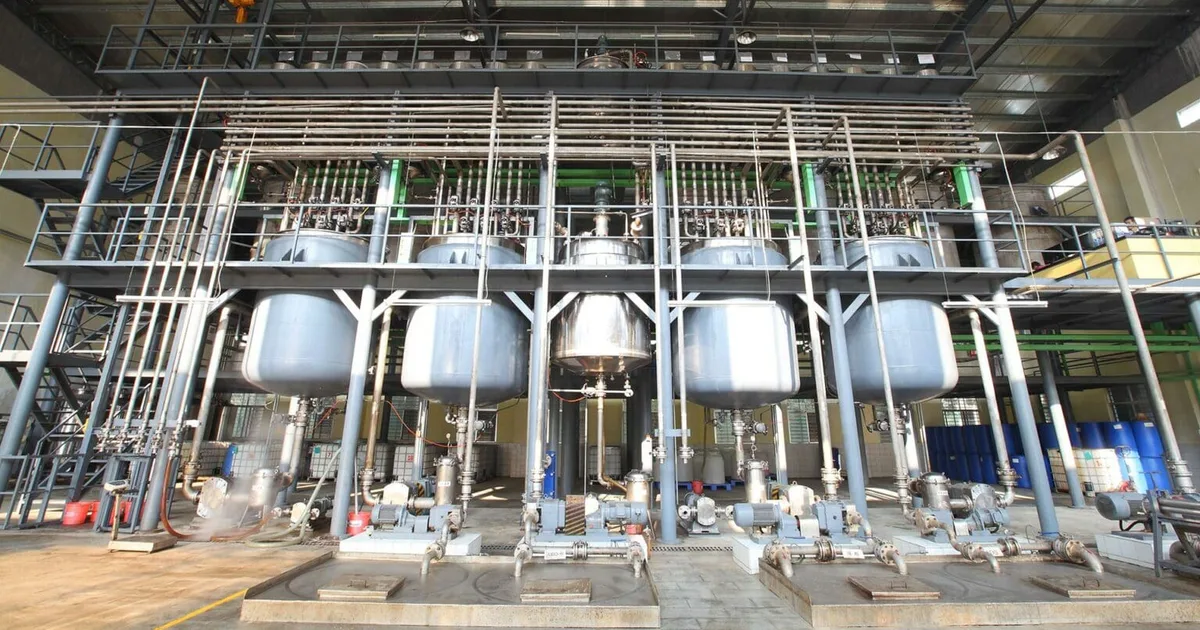
Setting up a detergent factory in Saudi Arabia follows a defined industrial licensing track overseen by the Ministry of Industry and Mineral Resources, moving through three consecutive stages: establishment, construction, and production. The Saudi Standards, Metrology and Quality Organization (SASO) enforces the technical regulation for detergents, which requires a Saber conformity certificate before any product reaches the market. This guide outlines the official steps and available financing sources based on government publications.
What industrial licence is required for a detergent factory?
The primary permit is the industrial licence issued by the Ministry of Industry and Mineral Resources. According to the official service page, the licence is "a document issued to the industrial investor to begin completing the project establishment requirements; it is valid for one year only and does not authorise the holder to start production" (source). Application processing takes 30 to 90 days and is submitted electronically via the ministry's website.
What are the three stages of the industrial licence?
| Stage | What it permits | Announced timeline | Licence validity |
|---|---|---|---|
| Establishment (licence issuance) | Complete project establishment requirements; no production | 30–90 days for application processing | One year |
| Construction (upgrade) | Customs exemption for machinery and spare parts, partial workforce endorsement; no production | 48 hours for the service | One year, renewable |
| Production (upgrade) | Access to all industrial services after actual production starts | 48 hours for the service | — |
The ministry also offers an industrial licence amendment service (for general or technical data such as products, machinery, and raw materials) with a processing time of 30–90 days (source).
What are the technical requirements for detergent products (technical regulation and Saber)?
The Saudi Standards, Metrology and Quality Organization (SASO) enforces the technical regulation for detergents. A guidance manual details the conformity requirements (source). The organisation also publishes the technical regulation for facilities relevant to the sector (source).
Before launching any product, a Saber conformity certificate must be obtained through the Saber electronic platform, which verifies that the product complies with the technical regulation and Saudi and Gulf standards.
What are the sequential steps to start a detergent factory project?
- Feasibility study: Define products (laundry liquid, powder, surface disinfectants, etc.), production capacity, machinery, raw materials and their sources (local/imported), and sales channels (retail, B2B, export).
- Commercial register and establishment: Set up the legal entity (commercial register, chamber of commerce membership) before applying for industrial services.
- Environmental classification: Determine the environmental permit category for your activity via the "Sana'i" platform (service duration: ten days).
- Industrial licence (establishment stage): Submit the application electronically and attach product, machinery, and raw-material data.
- Industrial site: Apply for land allocation or a ready-built factory in an industrial city (MODON).
- Upgrade to construction: After completing establishment and meeting requirements, to obtain customs exemption for imported equipment.
- Import of chemicals: If needed, request a permit to import non-restricted chemicals through the Ministry of Industry (the request is assessed in coordination with relevant authorities).
- Trial operation and upgrade to production: After fulfilling requirements and commencing actual production.
- Saber conformity certificate: Register the product on the Saber platform and obtain the conformity certificate before sale.
What financing and incentive options are available?
- Industrial loan from the Saudi Industrial Development Fund (SIDF): An electronic service for requesting financing for industrial projects (linked from the licence page).
- Future Factories Initiative (competitive accelerated incentive track): A financing and incentive programme for automation, digitisation, and energy efficiency, offering a grace period of up to 24 months, a repayment period of up to seven years, and application review within eight weeks (source). Conditions: the project must be operational and productive, hold all licences, be economically viable, and use commercially proven technologies.
- Innovative Factories Grants Initiative: Financial grants for applied research projects (TRL 4 or higher) in partnership with R&D centres, led by the Ministry of Industry and the Research, Development and Innovation Authority (source).
Key figures
- Industrial licence application processing (establishment): 30–90 days (source)
- Establishment licence validity: one year (source)
- Upgrade service duration (construction/production): 48 hours (source)
- Future Factories Initiative grace period: up to 24 months (source)
- Future Factories Initiative repayment period: up to seven years (source)
- Future Factories Initiative application review: no more than eight weeks (source)
- Environmental classification service duration: ten days (via Sana'i platform)
Summary and what to monitor
Begin with a precise feasibility study that defines products, formulations, machinery, and raw materials; it forms the basis for all licence data. Register your legal entity, then apply for the industrial licence (establishment stage) electronically. Arrange the industrial site and environmental classification early, and evaluate financing options: the industrial loan for new projects, and the Future Factories Initiative if the factory is already operating and you want to automate production lines. Do not launch any product before obtaining a Saber conformity certificate under the detergent technical regulation. Track updates from the Ministry of Industry and Mineral Resources, SASO, and the Saudi Industrial Development Fund for any changes in requirements or new incentive programmes.