
Saudi Women's Driving License: Requirements, Steps & Test Guide (2026)
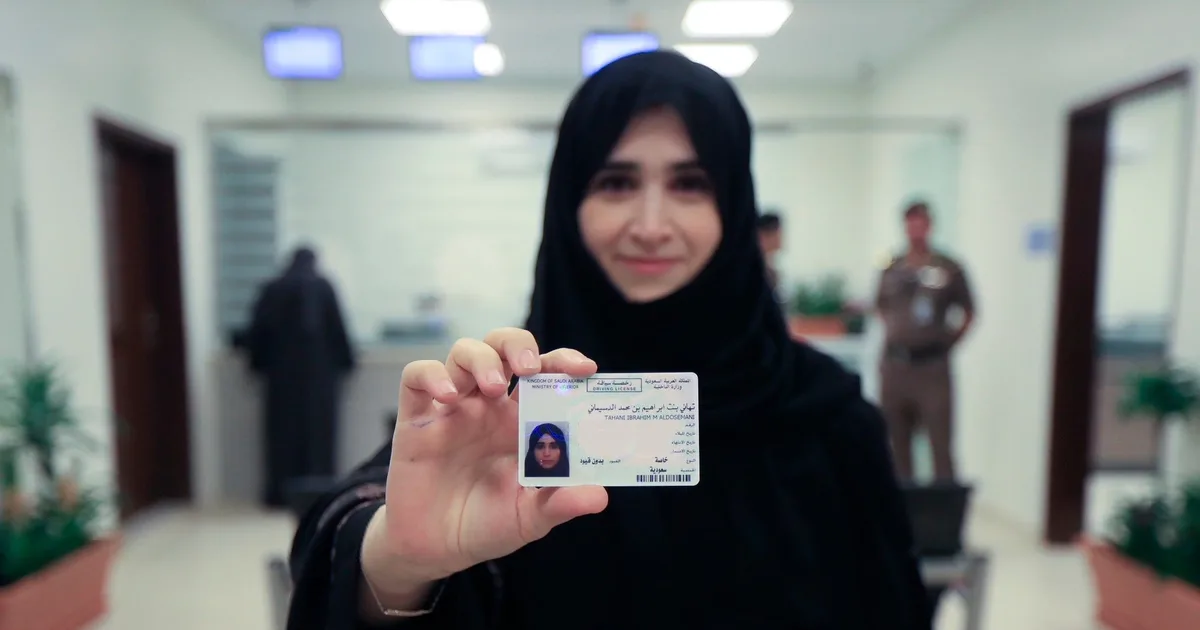
Since June 24, 2018, driving has been a guaranteed right for women in Saudi Arabia under the royal order issued September 26, 2017, which directed that the Traffic Law and its executive regulations apply equally to men and women. Today, women obtain a license under the same conditions and steps as men, through accredited driving schools and the Absher platform.
What are the requirements for a women's driving license in Saudi Arabia?
Requirements are identical for men and women for a private license and include:
- Minimum age of 18 Hijri years.
- Pass a medical exam at an approved center and be free of conditions that impair driving.
- Clean record with no offenses that bar license issuance.
- Complete the mandated training at a General Directorate of Traffic-approved driving school.
- Pass both the theoretical and practical tests.
- Pay the prescribed fees.
Documents typically requested by driving schools: a copy of the valid national ID or residency permit, 4×6 personal photos, and a completed registration form.
How do you register at an accredited driving school?
Training takes place exclusively at schools accredited by the General Directorate of Traffic. Prominent examples include university-based schools such as the driving school at Princess Nourah bint Abdulrahman University in Riyadh and the school at King Abdulaziz University in Jeddah, as well as private institutes with multiple branches like Dallah Institute (established 1995), which operates in several cities.
Two ways to register:
- In person: visit the school and complete the registration form directly.
- Online: go to the school's official website, enter your data, submit the form, and await confirmation.
Traffic appointments linked to the license (booking the test, issuing the license) are scheduled via the Absher platform using your national ID or residency number and date of birth.
What are the training and test stages in order?
The trainee progresses through the following stages as adopted by accredited schools:
- Register at the school and open a file.
- Undergo the medical exam at an approved facility.
- Attend theoretical lectures on traffic regulations, signals, and right-of-way rules.
- Train on a simulator (where available).
- Practical on-road training with a certified female instructor.
- Theoretical test (computer-based).
- Practical road test.
- License issuance after passing, often on the same day or the next.
Important note: Training hours are not fixed for everyone. Schools determine the appropriate level for each trainee after an initial assessment, so duration and cost vary person to person. Ask the school about your proposed level and a fee breakdown before paying.
How do you choose the right driving school?
Before deciding, compare schools on the following points:
- Proximity to home: training repeats over several days; a long commute consumes time and energy.
- Appointment availability: some schools have high demand; ask about the nearest start date and schedule flexibility.
- Level-assessment method: how does the school evaluate your level, and will it reassess if you improve quickly?
- Fee breakdown: request a written statement of what the fees cover and what is charged separately (e.g., retest fees).
- Simulator availability: simulator training before hitting the road reduces anxiety, especially for first-time drivers.
How do you prepare for the theoretical and practical tests?
Theoretical test
Measures your understanding of traffic regulations, signals, and right-of-way rules. Review the material provided in the school's lectures; do not rely on memorization alone. Practice with past test samples if available.
Practical test
Assesses your actual on-road behavior: mirror use, signaling before turns, adherence to speed limits, proper stopping, and intersection handling. Practice the maneuvers that worry you most, and ask the instructor for specific feedback after each session.
Remember: the goal is not just to pass the test, but to drive safely for life.
Key figures
- Minimum age: 18 Hijri years
- Implementation start date: June 24, 2018 (10 Shawwal 1439 AH)
- Royal order date: September 26, 2017
- Private license renewal fee (annual): 40 riyals (source: Al-Watan newspaper, October 5, 2026)
- Motorcycle license fee: 200 riyals for ten years (source: Al-Watan newspaper)
Summary and what to monitor
Obtaining a driving license for women in Saudi Arabia is a unified, clear process: register at an accredited school, complete training, pass both tests, and receive your license via Absher. Before starting, compare at least three schools on proximity, appointment availability, fee breakdown, and simulator availability. Follow updates from the General Directorate of Traffic and the Absher platform for any changes in fees or requirements, and ensure your medical exam result is updated in the system before booking a test appointment.