
Saudi Arabia Foreign Property Ownership 2026: Zones, Rules & Full Process
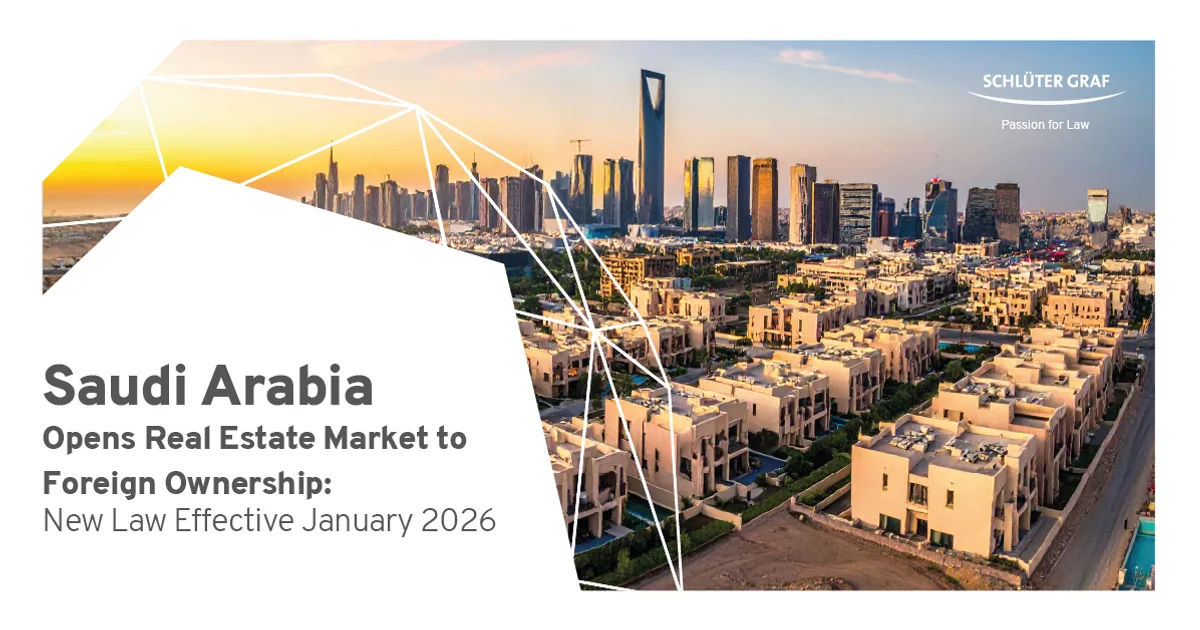
Saudi Arabia’s Non-Saudi Real Estate Ownership Law took effect on 22 January 2026 (3 Sha’ban 1447 AH) under Royal Decree No. (M/14) dated 19/1/1447 AH, replacing the 1421 AH regulation. The General Authority for Real Estate confirmed the launch as part of the kingdom’s real-estate legislative framework.
What is the Non-Saudi Real Estate Ownership Law and what changed?
The new law ties ownership to geographic zones approved by the Council of Ministers on the recommendation of the General Authority for Real Estate’s board and with the endorsement of the Council of Economic and Development Affairs. Each zone decision specifies the permitted area, allowed property rights, maximum non-Saudi ownership ratios, maximum usufruct periods, and any additional controls. “Non-Saudi” covers non-Saudi individuals, non-Saudi companies, non-Saudi non-profit entities, and any legal person the Council of Ministers may designate.
Where are the approved geographic zones for ownership?
The approved zones are published on the “Saudi Properties” portal at saudiproperties.rega.gov.sa/zones. The portal provides detailed maps of specific locations with permitted ratios, right types, durations, and controls. According to the Authority, ownership is enabled across the kingdom’s regions, with clear regulatory frameworks for Riyadh, Jeddah, Makkah and Madinah as set out in the geographic-zone document released during Q1 2026.
Who may own and what are the conditions by category?
Requirements differ by applicant category, as stipulated in the implementing regulations:
1. Non-Saudi individual legally resident in the kingdom
- May own one residential property outside the geographic zones, except in Makkah and Madinah.
- Inside zones: ownership follows the controls of each approved zone.
- Application is submitted directly via the Saudi Properties portal using the residency number, with automated verification of requirements.
2. Non-Saudi individual not resident in the kingdom
- Ownership only inside approved geographic zones.
- Must obtain the digital ID issued by the Ministry of Interior through Saudi missions abroad.
- Must open a bank account in the kingdom in their own name.
- Must secure a Saudi mobile number registered to the digital ID.
3. Non-Saudi companies
- Register first with the Ministry of Investment via the “Invest Saudi” platform and obtain the unified number (700).
- Disclose direct and indirect owners at registration.
- The legal representative must hold an ID issued under Saudi regulations.
- Open a corporate bank account in the kingdom.
- Report any ownership transfer of 5% or more within 15 days.
4. Non-Saudi non-profit entities
- Register with the National Center for Non-Profit Sector Development per its procedural guide.
- Disclose direct and indirect controllers.
- Legal representative with an approved ID, and a bank account in the kingdom.
- Report any material change within 15 days.
What are the ownership controls in Makkah and Madinah?
The law restricts ownership in the two holy cities to:
- Individuals: only Muslim natural persons, and only within approved zones.
- Unlisted Saudi companies with foreign shareholders: may own within the zones, including the two cities.
- Listed companies and investment funds: ownership governed by the Capital Market Law in coordination with the Authority.
What fees apply to non-Saudi property transactions?
Article 9 imposes a fee collected by the General Authority for Real Estate on the value of any non-Saudi disposition of property rights, capped at 5% of the value, without prejudice to any other fees or taxes.
How does the ownership journey work via the Saudi Properties portal?
- Access the Saudi Properties portal and review the geographic zones and maps.
- Identify the target property and confirm it falls inside an approved zone.
- Select the pathway matching your category (resident, non-resident, company, non-profit entity).
- Fulfil the regulatory requirements for that category (digital ID, bank account, registration with the Ministry of Investment or the National Center for Non-Profit Sector Development).
- Submit the application electronically through the portal, which is linked to the real-estate title registration system.
- Track the application status and complete remaining steps until the title deed is issued.
Key figures
- Effective date: 22 January 2026 (3 Sha’ban 1447 AH) — General Authority for Real Estate
- Royal Decree: No. (M/14) dated 19/1/1447 AH
- Fee cap: no more than 5% of transaction value — Al Waeam Newspaper
- Zones portal: saudiproperties.rega.gov.sa/zones
- Ownership-change reporting window (companies): 15 days — implementing regulations
Bottom line and what to watch
The new law provides a clear, transparent framework for non-Saudi ownership through defined geographic zones. You should verify a property’s location on the Saudi Properties portal before any financial commitment, because zones are delineated by detailed maps and may be updated. Monitor General Authority for Real Estate announcements on zone updates throughout 2026, and consult the implementing regulations for category-specific controls. For non-Saudi companies, start by registering on the “Invest Saudi” platform to obtain the unified number (700) — an indispensable first step.