
Saudi Flexible Work Rules 2026: Hours, Eligibility, and Rights Explained
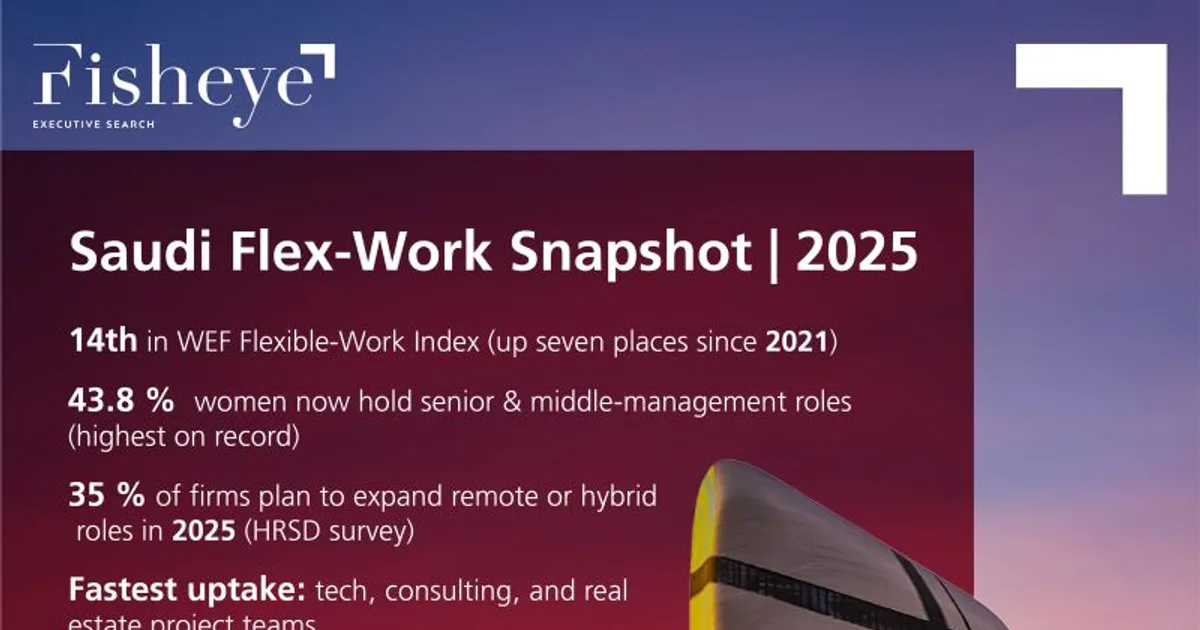
The Ministry of Human Resources and Social Development issued the procedural guide for flexible work under Ministerial Decision No. 153307 dated 11 Dhu al-Qi'dah 1445 AH (May 19, 2024). The guide caps daily hours at 12 and monthly hours at 160 for a worker at one or more establishments, with contracts documented electronically via the Marn platform.
What is flexible work in Saudi Arabia?
Flexible work is an employment model where a non-full-time Saudi worker performs duties for one or more employers and is paid by the hour, provided hours with a single employer fall below half the establishment's standard working hours (source). The model is restricted to Saudi nationals, and the Marn platform documents contracts electronically and links them automatically to the General Organization for Social Insurance (GOSI) (source).
Who can register for flexible work?
The ministry sets the following conditions for registration as a flexible worker (source):
- Saudi nationality.
- Minimum age of fifteen years.
- Not a government employee.
- Not an active optional subscriber to social insurance.
- Not a business owner.
- Cannot combine flexible work with regular full-time employment at the same establishment.
How many hours can you work and how is pay calculated?
The ministry caps flexible work hours as follows (source):
| Item | Maximum |
|---|---|
| Daily working hours | 12 hours (across one or more establishments) |
| Monthly working hours | 160 hours (across one or more establishments) |
Calculation formula: contract duration in days × daily working hours = maximum available hours, capped at 160 hours per month. Example: a five-day contract = 5 × 12 = 60 maximum hours (source).
There is no limit on the number of contracts an individual may sign, provided the contracts do not conflict and all are documented via the Marn platform (source).
What rights does a flexible worker have, and what is excluded?
Included rights
- Social insurance: The worker is automatically registered with GOSI upon contract documentation. Every eight hours counts as one working day, and every thirty counted days equals one subscription month (source).
- Documented electronic contract: Recorded via the Marn platform to protect both parties; the contract remains open for acceptance for five days from dispatch (source).
- No probation period: Flexible workers are not subject to a probation period (source).
What the flexible work contract does not cover
Based on the procedural guide and ministerial decision, the employer is not required to provide the following to a flexible worker (source) (source):
- Paid leave (annual, holiday, or sick).
- End-of-service award.
- Medical insurance.
- Overtime pay under the standard rules (because the contractual relationship is already based on an hourly wage).
Legal advisor Dr. Khalid Rashid Khayyat confirmed that any clause in an employment contract violating the Labor Law is void even if the worker agrees, citing Article 8 of the Labor Law (source).
How to register on the Marn platform
The registration journey for a flexible worker via the Marn platform proceeds as follows (source):
- Enter required data: national ID number – Hijri date of birth – phone number – email – password.
- Review and accept terms and conditions.
- Enter the verification code sent to the phone number linked to the ID in the Absher system.
- Confirm login via Absher.
- Complete the professional profile (CV, personal photo).
- Browse available opportunities and apply.
- Accept the contract electronically within five days of receipt; it then becomes a documented contract and the hiring process concludes.
What is the difference between flexible work and remote work?
| Aspect | Flexible Work | Remote Work |
|---|---|---|
| Nature of relationship | Non-full-time worker paid by the hour | Job performed outside the employer's premises |
| Pay structure | Hourly | Usually monthly |
| Hours cap | 12 hours daily / 160 hours monthly | No such cap |
| Platform | Marn platform | Remote Work platform |
What does the employer gain from flexible work?
- Unlimited hiring of flexible workers without a probation period (source).
- Suited for peak times and seasons (retail, restaurants, events) (source).
- Electronic contracts send data to social insurance automatically, reducing paperwork (source).
- Flexible-worker ratios in the Nitaqat program follow special rules set by the ministry per sector and occupation (source).
Key figures at a glance
- Maximum daily hours: 12 hours (source: Ministry of Human Resources)
- Maximum monthly hours: 160 hours (source: Ministry of Human Resources)
- Contract acceptance window: five days (source: Marn platform)
- Minimum age: fifteen years (source: procedural guide)
- Insurance subscription calculation: every eight hours = one working day; thirty counted days = one subscription month (source: procedural guide)
Bottom line and what to watch
Flexible work is a regulated option for Saudis seeking extra income or experience within defined hours, with guaranteed social insurance registration. However, you forgo paid leave, end-of-service award, and medical insurance. Before accepting, compare the total hourly value (hours × missing benefits) against a full-time offer. Check Ministry of Human Resources updates regularly via the procedural guide and the Marn platform for any changes to hour caps or Nitaqat calculation rules.