
Saudi Delivery Market 2026: Business Models, Licences, and Profitability Challenges
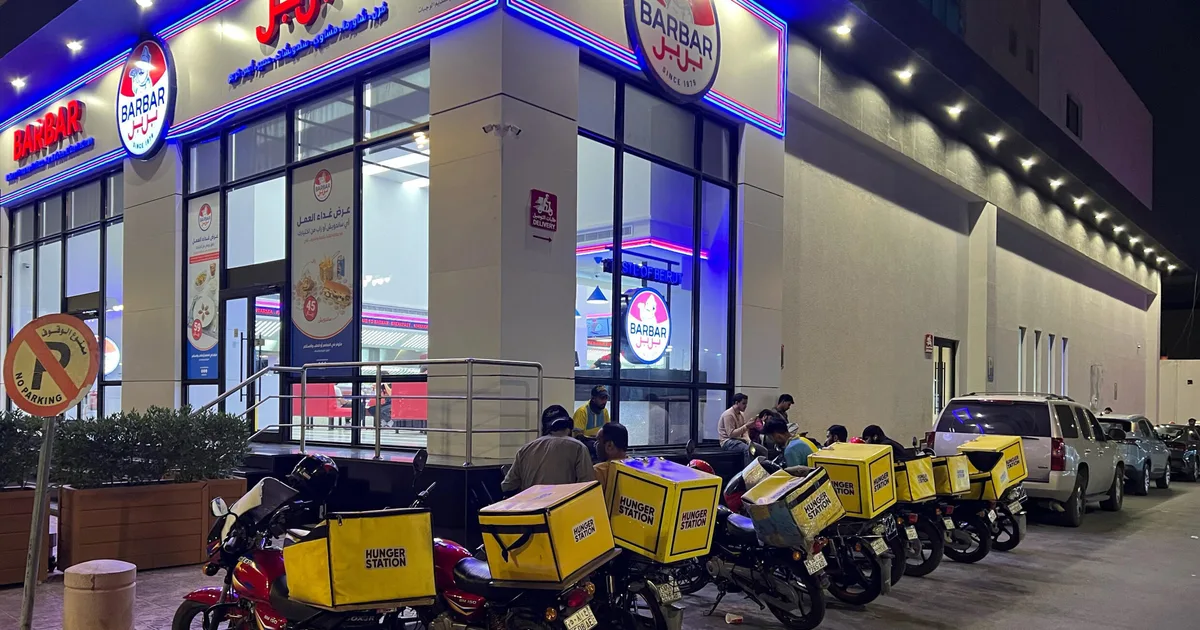
Saudi Arabia’s delivery sector recorded more than 132 million orders in the second quarter of 2026, up 30.5% from the same quarter in 2025, according to the General Authority for Transport index reported by Sabq. Demand is concentrated in Riyadh (44%), Makkah (22%), and the Eastern Province (16%), with the remainder spread across Madinah (5%) and other regions.
What delivery business models can you start with?
Your first decision shapes everything that follows: do you sell a food product through existing apps, run your own delivery fleet, or build a platform that connects merchants with couriers?
- Food business selling via apps (restaurant / cloud kitchen / pastry shop): Lowest setup cost, but you pay a commission of 28–35% of each order’s value to the platform, according to sector data published by Al-Eqtisadiah.
- Food business with self-delivery: You take orders through your own website or account and fulfil them with your own fleet. Greater control over the experience, higher operating costs, and transport requirements that must be verified with the General Authority for Transport.
- Delivery company or app (platform linking merchants, customers, and couriers): This is a regulated transport activity; the General Authority for Transport includes “delivery apps” among the land-transport activities it oversees.
What licences are required for each model?
The steps differ by model, but these are the documented basics on government platforms:
- Commercial register from the Ministry of Commerce with the appropriate activity.
- Commercial licence via the Balady platform: Includes the Civil Defence safety permit. Steps: enter the establishment’s register, define the activity and area → specify the location and shop/vehicle details → pay fees for instant activities or submit the request to the municipality for others. Published timeline: one to ten days.
- Transport licence from the General Authority for Transport (for the delivery-company/app model only): Apply through the “Logisti” platform by selecting the licence-issuance service for the relevant activity. Processing time and cost vary by activity; contact number 19929.
- Health certificates for workers (for food activities): Every worker needs a health certificate. Steps on Balady: submit request → verify shop licence and worker’s occupation → medical examination at the Ministry of Health → pass health-awareness session → pay fees and print certificate. Published timeline: ten days.
Balady advises checking the municipal-activity requirements enquiry service before leasing a site, because the list varies by activity.
How do app commissions affect your project’s profitability?
Delivery-platform commissions in Saudi Arabia range between 28% and 35% of order value—roughly 5% higher than in Turkey and up to 45% higher than in China, according to a Mukatafa study (2021-2024) cited by Al-Eqtisadiah. About 90% of small establishments rely on apps as their primary sales channel, and roughly 40% of quick-service restaurant sales pass through digital platforms.
As a result, the number of restaurants and cafés doubled from fifty-seven thousand outlets (2021) to more than one hundred twelve thousand (2024), while average revenue per outlet fell from 1.4 million riyals to less than nine hundred thousand riyals, a compound annual decline of nearly 14%.
How large is the restaurant-and-café market linked to delivery?
The restaurant-and-café market grew from about eighty billion riyals to about one hundred billion riyals (2021–2024), a compound annual growth rate of roughly 7%, driven by the expansion of delivery platforms, according to Al-Eqtisadiah’s financial-analysis unit.
What is the competitive landscape among major delivery apps?
Al-Eqtisadiah reported preliminary talks for “Ninja” to acquire “HungerStation”, noting that any deal requires General Authority for Competition approval. A concentration request must be filed at least ninety days before completion if the parties’ combined annual revenues exceed two hundred million riyals. The lesson for a small project: competing for the end customer is expensive; specialising (product category, specific neighbourhood, corporate service) may be a smarter entry point.
Key figures
- Q2 2026 orders: 132 million orders (General Authority for Transport / Sabq)
- Order growth: 30.5% year-on-year (General Authority for Transport / Sabq)
- Riyadh share: 44% of total orders (General Authority for Transport / Sabq)
- App commissions: 28–35% of order value (Mukatafa study / Al-Eqtisadiah)
- Outlets in 2024: 112 thousand+ (Mukatafa study / Al-Eqtisadiah)
- Average outlet revenue 2024: < 900 thousand riyals (Mukatafa study / Al-Eqtisadiah)
- Restaurant market size 2024: ~100 billion riyals (Financial-analysis unit / Al-Eqtisadiah)
- Balady licence timeline: 1–10 days (Balady platform)
- Health-certificate timeline: 10 days (Balady platform)
Bottom line and what to watch
Choose your business model before signing a lease: selling via apps is faster and cheaper to launch, but commissions erode margins. Self-delivery gives you control and requires a transport licence. Building a platform is a fully regulated transport activity. Factor in ten days for health certificates and one to ten days for the Balady licence in your opening schedule. Track the General Authority for Transport’s quarterly index to monitor geographic demand growth, and the General Authority for Competition’s decisions to understand big-player moves.