
Digital Government Services in Saudi Arabia: How They Are Evolving and What Official Indices Say in 2026
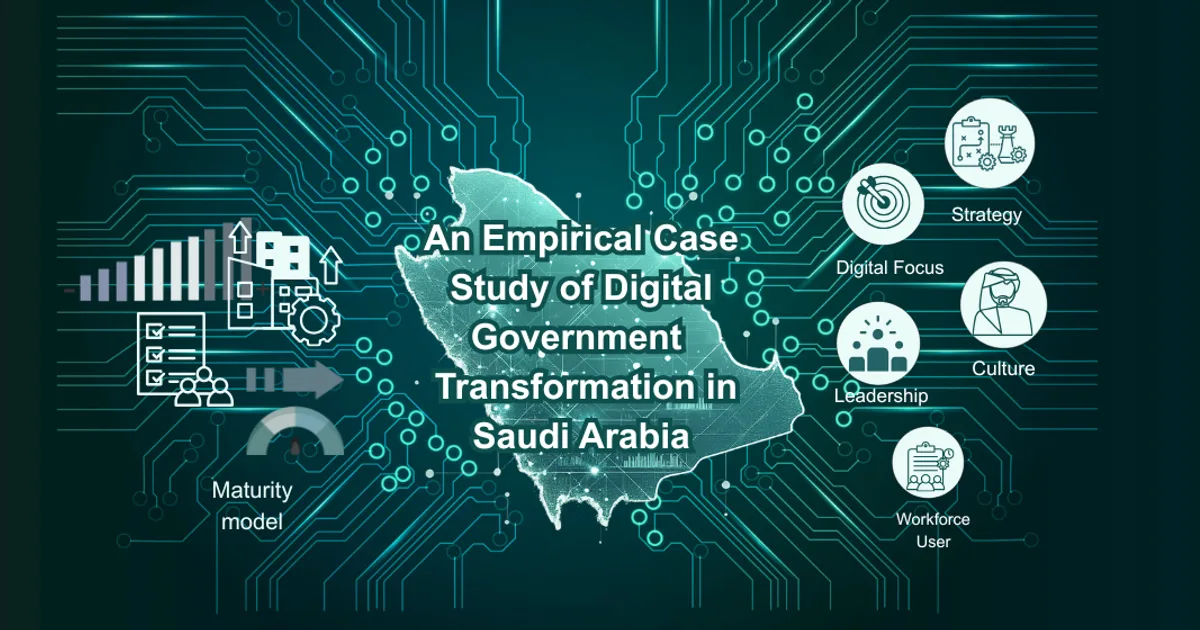
Saudi Arabia ranked second among 197 economies in the 2025 Digital Government Maturity Index, while its 2026 Digital Experience Maturity Index reached 87.06% at an "advanced" level. The Digital Government Authority assessed 59 government platforms to produce these results.
The Digital Government Assessment (DGA) index is an annual tool launched by the Digital Government Authority in 2022. It measures the maturity of digital experiences across government platforms and supports their development to improve service quality and user experience.
What is the Digital Experience Maturity Index and how has it evolved?
The index is an annual measure introduced by the Digital Government Authority in 2022 to evaluate government platforms. Since then, its figures have grown significantly, reflecting a broader evaluation scope and higher user participation.
According to data published by Independent Arabia in August 2025, the index score rose from 77.26% at launch to 87.06% in the 2026 assessment. The number of evaluated platforms increased from 12 to 59, nearly five times the original count. Participants in the assessment jumped from about eighteen thousand to more than eight hundred and five thousand, a roughly forty-five-fold increase. In a single year, the number of platforms covered grew by 18%, while participants rose by 115% compared with the previous year.
How is Saudi Arabia investing in digital infrastructure and AI?
Digital government transformation requires massive infrastructure beyond user interfaces. This was evident at LEAP 2026, which concluded its fifth edition in Riyadh with investments, announcements, and agreements totaling nearly $15 billion, according to Al-Eqtisadiah newspaper.
These investments covered artificial intelligence (AI) infrastructure, data centers, cloud computing, technology manufacturing, and venture capital. Amazon Web Services announced the launch of its first cloud region in Saudi Arabia in December 2026, with an investment exceeding $5.3 billion. Al Moammar Information Systems committed $1.2 billion to expand data center capacity to 192 megawatts, while NHC Innovation unveiled an $800 million investment to develop the "Khuzam Digital Valley" with scalable capacities up to 65 megawatts. Venture capital investments and funding rounds during the conference reached approximately $857 million.
How do government and academic institutions manage digital transformation?
Digital transformation extends beyond the regulatory authority into the structures of government and academic bodies. At the Islamic University of Madinah, the General Administration of Digital Transformation was established as a strategic enabler to lead institutional digital change. It reports directly to the university president's office under a decision issued on 09/06/1447 AH, according to the university's official website.
This administration governs digital initiatives and services, develops institutional and technical infrastructure, and enables integration across systems, platforms, and data. It builds a digital ecosystem based on effective governance and data-driven decision-making, applying the core digital transformation standards issued by the Digital Government Authority. It also aligns its technical work with other departments, including information technology, e-learning, data management, and cybersecurity.
Other institutions, such as Umm Al-Qura University, provide detailed user guides for their digital services through the Deanship of Information Technology and E-Learning. These services are officially registered with the Digital Government Authority to ensure compliance with national standards.
What are the key figures in Saudi digital government transformation?
The following numbers reflect the scale of growth in the Kingdom's digital and investment infrastructure:
- Global ranking: Second among 197 economies in the 2025 Digital Government Maturity Index (Independent Arabia).
- 2026 Digital Experience Index score: 87.06% at an "advanced" level (Digital Government Authority).
- Evaluated platforms: 59 government platforms in 2026, up from 12 in 2022 (Independent Arabia).
- Assessment participants: More than eight hundred and five thousand in 2026 (Independent Arabia).
- Total LEAP 2026 investments: Nearly $15 billion (Al-Eqtisadiah).
- Amazon Web Services investment: Exceeding $5.3 billion for a cloud region scheduled for December 2026 (Al-Eqtisadiah).
- Al Moammar investment: $1.2 billion to raise data center capacity to 192 megawatts (Al-Eqtisadiah).
- International participation at LEAP 2026: Attendees from more than 165 countries and 1,300 speakers (Al-Eqtisadiah).
Why does backend integration represent the next challenge?
Despite rising digital experience scores, closer examination raises questions about the next phase. Independent Arabia notes that improving a platform's interface or simplifying its steps can be achieved relatively quickly, making the real challenge what happens behind the digital interface rather than its design alone.
The coming phase points toward more proactive, interconnected government services that rely less on isolated platforms. Massive infrastructure investments support this shift. The scheduled launch of the first Amazon Web Services cloud region in the Kingdom at the end of 2026 will provide the technical foundation needed to link government data and systems more efficiently.
Since its launch in 2022 through its fifth edition in 2026, LEAP has hosted about five thousand speakers and generated deals and announcements worth nearly $60 billion. Its sixth edition is scheduled for April 12–15, 2027, to continue attracting investment and enabling innovation.
What practical steps strengthen digital infrastructure readiness?
Based on standards applied across government and academic institutions, organizational digital transformation follows specific steps:
- Establish a dedicated strategic entity for digital transformation and link it organizationally to the highest authority within the institution, such as a university president's office.
- Apply the core digital transformation standards issued by the Digital Government Authority and register websites officially with it.
- Govern digital initiatives and services, building an integration framework across information technology, data, and cybersecurity departments.
- Rely on data-driven decision-making to enable integration between different systems and platforms.
- Develop technical infrastructure using cloud services and local data centers to ensure stable connectivity.
What should observers track next?
Official figures show that digital government transformation in Saudi Arabia has moved beyond providing basic services to continuously measuring and improving the user experience. Users and technology observers should monitor the Amazon Web Services cloud region launch scheduled for December 2026, along with the annual results of the Digital Government Authority's Digital Experience Maturity Index. These developments will determine how effectively government services transition from isolated platforms to a proactive, interconnected model.