
How to Choose a Shipping Company in Saudi Arabia: A Licensed Logistics Guide
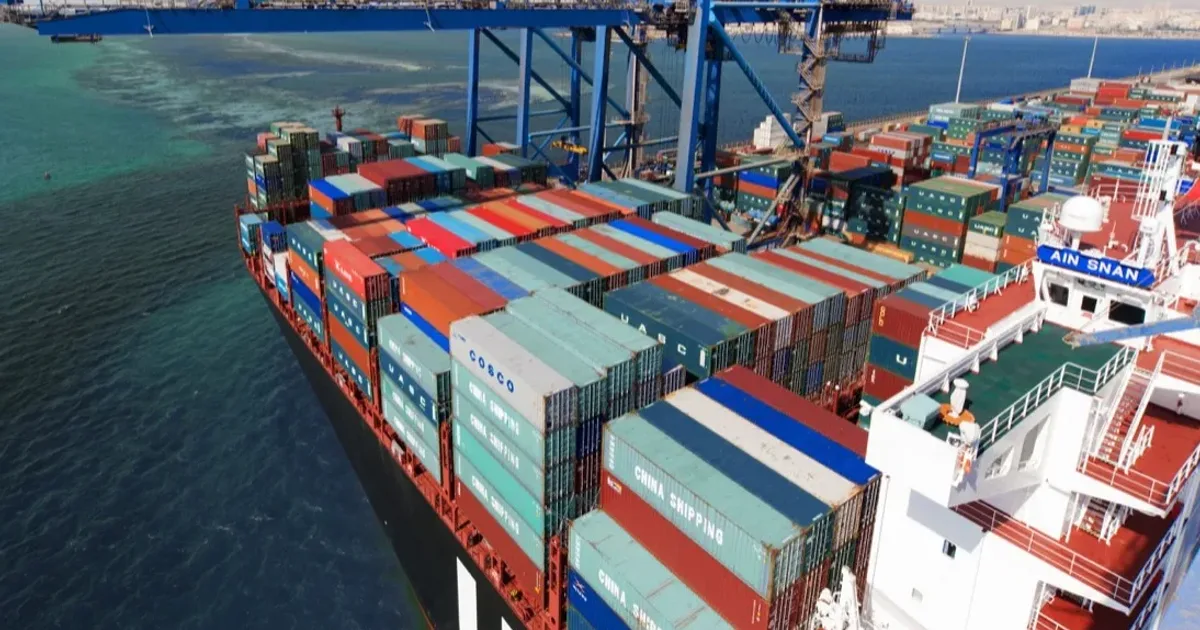
Saudi Arabia’s location places more than 40 fast-growing markets within four hours by air. Finding the best shipping and delivery company depends on network reach and infrastructure quality. No single carrier excels at everything; the right choice is a licensed provider matching your destination, parcel size, and budget.
What infrastructure supports shipping companies in Saudi Arabia?
Shipping companies rely on a vast transport network linking ports, airports, and roads. This infrastructure determines how quickly your parcel arrives and what it ultimately costs.
According to the Logistics Services Guide, the Kingdom sits at a strategic intersection of three continents: Asia, Africa, and Europe. The sector features extensive infrastructure supporting domestic and international freight movement. The Ministry of Transport and Logistic Services works to enable sector growth and integration across all transport modes, improving multimodal network connectivity and operations, as published by the Ministry of Transport and Logistic Services.
The Saudi Accreditation Center defines the logistics services industry as encompassing all supply chain management processes, from procurement, storage, and distribution to transport management and customs clearance. It notes that the transport and logistics sector tops national priorities through infrastructure investments and technology adoption, according to the Saudi Accreditation Center.
Who regulates the shipping sector and issues licenses?
Shipping is not an unregulated activity. Outlets and companies operate under specific localization and regulatory decisions designed to protect consumer rights.
The Ministry of Human Resources and Social Development issued a decision mandating the Saudization of freight service outlets and shipping brokers in the Kingdom. The decision covers fourteen activities at these outlets, implemented in coordination with the Ministry of Transport and Logistic Services and the Transport General Authority. Published on April 2, 2023, and enforced starting September 26, 2023, the details are available via the Ministry of Human Resources and Social Development. When you deal with any shipping company, you are dealing with an entity required to employ Saudi nationals at its service points.
How do the different types of shipping companies compare?
Companies vary by specialty. Some focus on small parcels within cities, while others handle heavy or international freight. Here is a comparison based on service type:
| Company Type | Best For | Key Features |
|---|---|---|
| National postal operator (SPL) | Economy domestic and international parcels | Wide branch network, National Address integration |
| International express carriers | Urgent documents and parcels abroad | Fast delivery, precise tracking |
| Local delivery companies (last mile) | E-commerce orders within cities | Quick handover, cash-on-delivery options |
| Delivery apps | Urgent requests, short distances | Delivery within hours |
| Freight transport companies | Furniture and heavy shipments | Large loading capacity |
Keep in mind that delivery apps are not built for large parcels or intercity shipping, while freight transport companies require prior agreements on packaging and insurance details.
What practical steps help you choose the right carrier?
Do not rely solely on the advertised price. Follow these steps to avoid surprises when receiving your shipment:
- Verify the license: Ensure the company is licensed and operates within the fourteen activities targeted for Saudization.
- Calculate the total cost: Ask about the base rate, cash-on-delivery fees, and insurance charges.
- Compare delivery times: Review stated timeframes against actual user experiences.
- Test the tracking system: Confirm the availability of an updated tracking number for your shipment status.
- Read the compensation policy: Understand the maximum payout for damage or loss and the required documentation.
Why does shipping cost differ for two parcels of the same weight?
The reason usually comes down to volumetric weight. Shipping companies calculate costs based on whichever is greater: the parcel's actual weight or its volumetric weight. Volumetric weight is derived from the parcel's dimensions (length × width × height) divided by a calculation factor set by each company. Consequently, a large box containing lightweight material can cost more to ship than a small, heavy one.
How does the national program support the shipping and delivery sector?
The National Industrial Development and Logistics Program contributes to transforming the Kingdom into a global logistics hub. According to the Logistics Services Guide, the program enhances logistics efficiency, quality, and speed, improves infrastructure capacity, and reduces shipping costs by connecting various local networks. It also streamlines customs clearance procedures and cross-border goods movement to support industrial growth, increasing local distribution efficiency for competitive delivery costs.
Future sector trends include automation, data and digital transformation, shared mobility, sustainability, and new transport methods.
What do e-commerce stores need from shipping companies?
If you run an online store, your needs go beyond low shipping rates. You require technical integration with your platform to generate waybills automatically, along with cash-on-delivery options and fast remittance of collected funds. Easy returns management and coverage of the cities where your customers live are equally critical. Many stores rely on multiple carriers simultaneously—one for major cities and another for remote areas—while periodically comparing their performance.
Key figures
- Seaports: Ten ports handling eleven million twenty-foot equivalent units (TEU) annually (Logistics Services Guide)
- Road network: More than two hundred thousand kilometers, ranked first globally in connectivity by the World Economic Forum (Logistics Services Guide)
- Airports: Twenty-eight airports handling nine hundred thousand tons of cargo annually (Logistics Services Guide)
- Railways: More than five thousand three hundred kilometers linking seaports, airports, and dry ports (Logistics Services Guide)
- Logistics centers: Twenty-two active centers and thirty-seven planned to link ports (Logistics Services Guide)
- Saudization activities: Fourteen activities at freight service outlets and shipping brokers (Ministry of Human Resources and Social Development)
- Container trade: Twelve percent of global container trade passes through the Red Sea (Logistics Services Guide)
What should you monitor going forward?
Always verify a shipping company’s license before handing over your parcel, and compare total costs rather than just base rates. Track updates regarding the implementation of the fourteen Saudization decisions and monitor the technological upgrades driven by the National Industrial Development and Logistics Program, as these will directly impact delivery speeds and pricing in the coming months.