
Saudi Arabia's Steel Industry: What Is Produced Locally and What Is Imported?
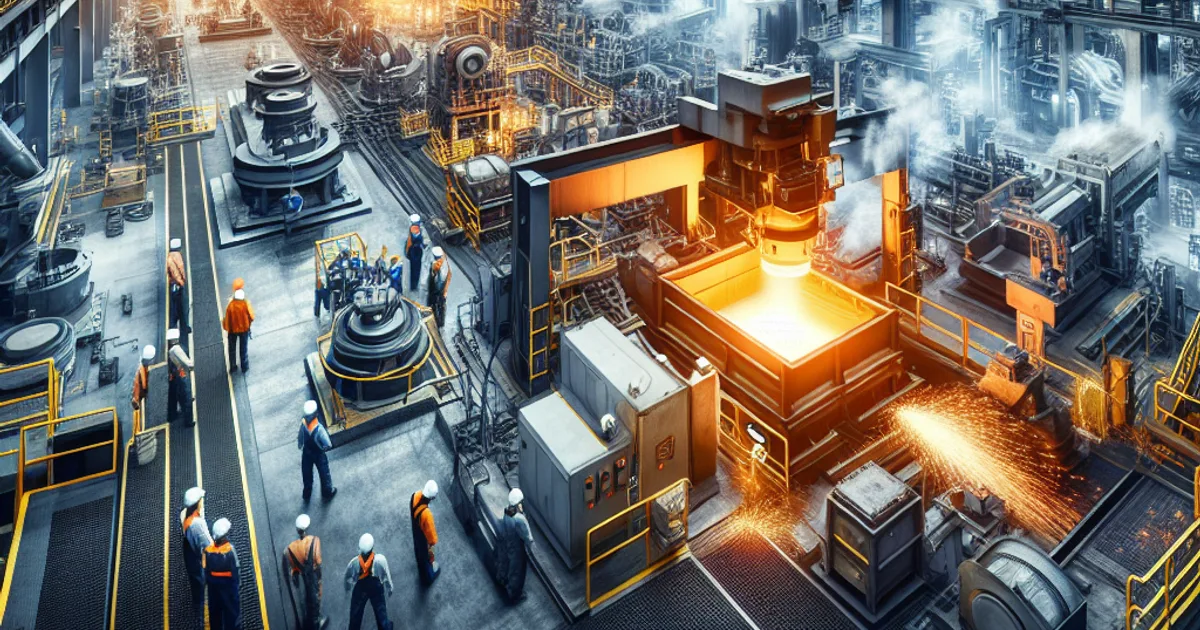
Seventy-five percent of Saudi Arabia's steel production capacity is concentrated in just two products: rebar and wire rod used heavily in construction. The kingdom relies on imports to cover demand for other products such as plates, clad sheets, and round bars, according to the government Daleel platform.
The steel industry converts iron ore into metal products serving construction, automotive, renewable energy, and aviation. Saudi Arabia hosts the largest market for these products in the Gulf Cooperation Council, supported by manufacturing localization targets.
What are the main trends in Saudi Arabia's steel sector?
Industrial policies currently focus the sector on four main tracks: decarbonizing production processes, implementing energy reforms, accelerating digitalization inside factories, and addressing challenges from global steel overcapacity.
According to the Daleel platform run by the Ministry of Industry and Mineral Resources, local industry benefits from abundant natural resources and the kingdom's position as the largest regional market. Vast natural gas reserves and low electricity prices provide a direct competitive advantage for steel plants using direct reduction and metal smelting technologies.
How does global steel consumption look and where does Saudi Arabia stand?
Global crude steel consumption reached 1,880 million metric tons in 2020, with expectations of a 1.7% annual increase over the following decade. For the period between 2024 and 2027, consumption is expected to remain relatively stable, rising from 1,752 million tons in 2024 to 1,762 million tons in 2027 at a compound annual growth rate of 0.2%.
China, historically dominant in the sector, is retreating, with its expected consumption falling from 857 to 784 million tons at an annual rate of 2.9%. India leads regional growth at 8.2% (from 148 to 187 million tons), followed by Latin America (2.8%), the rest of the world (2.7%), the Middle East and North Africa (1.5%), Europe (1.4%), and North America (1.1%).
| Region | Expected Compound Annual Growth Rate |
|---|---|
| India | 8.2% |
| Latin America | 2.8% |
| Rest of the World | 2.7% |
| Middle East and North Africa | 1.5% |
| Europe | 1.4% |
| North America | 1.1% |
| China | -2.9% |
Most global exports originate in Asia, specifically China, while imports flow largely to Europe and North America. The United States is the largest importer of steel products, mostly flat products like plates and sheets.
Why is investing in the steel industry a viable option?
The steel industry delivers economic benefits to the kingdom by contributing to gross domestic product and creating jobs. It enables other sectors—construction, automotive, renewable energy, and aviation—by supplying required raw materials.
The Ministry of Industry and Mineral Resources is strengthening the regulatory framework through an updated mining investment law, simplified licensing, integrated services to improve the investor journey, and the establishment of a mining services company and an exploration fund. The Saudi Geological Survey runs support programs including the general geological survey program and the accelerated exploration program to execute highly reliable exploration initiatives and attract investment.
What are the steps to establish a steel plant in Saudi Arabia?
The Daleel platform outlines a clear path for investors entering the sector, consisting of the following steps:
- Research and awareness (optional step).
- Contacting government entities and preparing the initial phase of the feasibility study (optional).
- Signing preliminary agreements (optional).
- Preparing the feasibility study and applying for available support packages (optional).
- Applying for a foreign investment license.
- Issuing the commercial registration.
- Requesting an industrial license under establishment status.
- Registering the facility.
- Fulfilling specific requirements where applicable.
- Obtaining industrial land.
- Applying for financing.
- Requesting an environmental permit for construction.
- Applying for a building permit.
- Requesting an upgrade of the industrial license from establishment to construction status.
- Obtaining safety licenses before operation.
- Requesting an environmental permit for operation.
- Applying for an operating license.
- Requesting an upgrade of the industrial license from construction to production status.
- Starting operations.
- Post-operation support.
- The export journey.
What challenges face the sector globally and locally?
Globally, increases in production capacity have outpaced closures, creating a global surplus that has lowered utilization rates. According to the Daleel platform, this threatens long-term economic sustainability and industry efficiency.
Locally, 75% of production is concentrated in specific construction products. Other products, such as plates, clad sheets, and round bars, are imported to meet the needs of various industrial sectors. Attention is turning toward local and regional steel markets that hold growth potential across multiple product segments.
Key figures
- Production concentration: 75% of Saudi Arabia's steel production capacity is dedicated to rebar and wire rod (Daleel platform).
- Global consumption (2020): 1,880 million metric tons (Daleel platform).
- Expected consumption (2024): 1,752 million tons (Daleel platform).
- Expected consumption (2027): 1,762 million tons (Daleel platform).
- China's expected growth rate: -2.9% annually (Daleel platform).
- India's expected growth rate: 8.2% annually (Daleel platform).
- Middle East and North Africa growth rate: 1.5% annually (Daleel platform).
- Investor journey steps: twenty-one steps to establish and operate a plant (Daleel platform).
What should contractors and investors monitor next?
Contractors, investors, and those seeking opportunities in the industrial sector should track shifts related to decarbonization and digitalization in local steel plants, as these will define future competition standards. Monitor updates issued by the Ministry of Industry and Mineral Resources regarding the mining investment law and support packages available within the twenty-one steps defined for the investor journey. If your project requires plates or clad sheets, factor in that current reliance remains on imports to cover these products until local production capacity expands to include them.