
Saudi Civil Aviation Training 2026: Accredited Pathways and Authorities
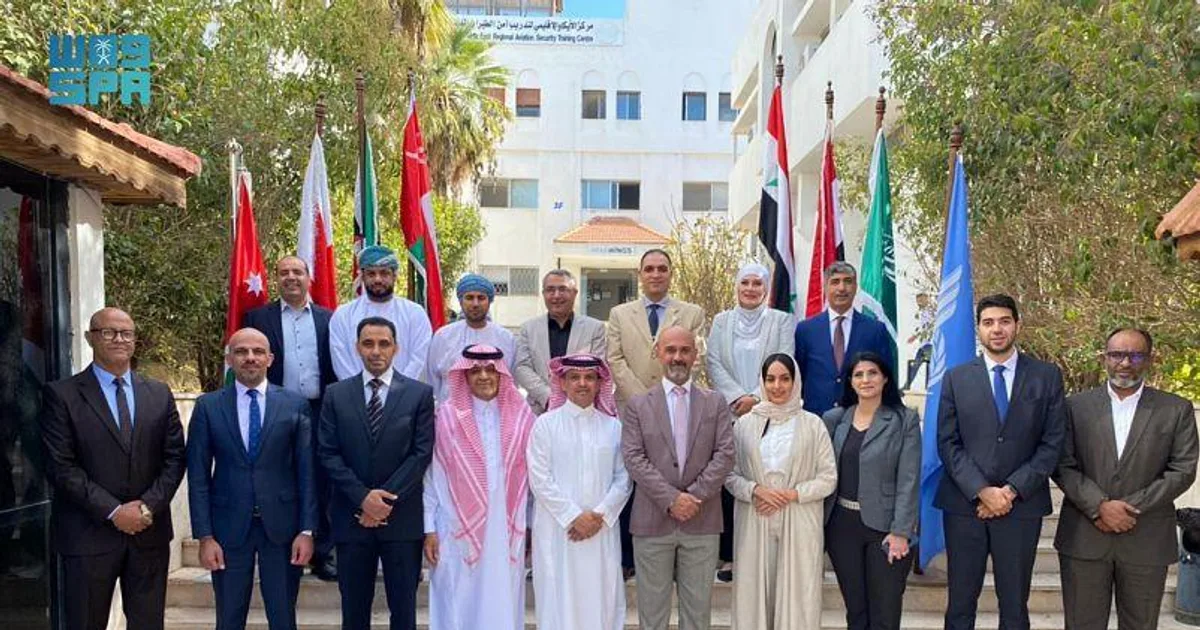
Saudi Arabia leads the region in civil aviation training with specialised programmes that link qualification directly to employment. The landscape covers air traffic control, aviation security, firefighting and rescue, airport operations, and navigation systems maintenance, alongside national carrier crew training and commercial pilot cadet schemes. This guide maps the officially accredited entities, their training tracks, entry requirements, and the local and international accreditations announced through November 2026. (Source: Four Saudi teams among the top 10 out of 91… "Linux" crowned world champion in STEM | Al Eqtisadiah)
Which official bodies oversee civil aviation training in Saudi Arabia?
The General Authority of Civil Aviation (GACA) is the regulator and licensing body for all civil aviation activities, including the approval of training schools and the issuance of pilot and air traffic controller licences. The Saudi Academy of Civil Aviation in Jeddah operates under GACA and serves as its primary training arm for technical and operational tracks. The Prince Sultan Aviation Academy in Jeddah belongs to Saudia, the national flag carrier. The Future Pilots Programme is run by flynas, a Saudi low-cost carrier, in partnership with approved training organisations. (Source: Saudi Arabia: We dealt with exceptional sector circumstances by activating alternative routes | Al Eqtisadiah)
What is the Saudi Academy of Civil Aviation and what tracks does it offer?
Founded in Jeddah in 1962 as a technical training institute, the Saudi Academy of Civil Aviation became a specialised academy in 2007 to qualify human capital and support the air transport industry. It comprises four specialised centres and a basic training centre: (Source: Civil Aviation Investment Forum showcases commercial opportunities at Muscat, Salalah and Sohar airports – Oman Daily)
- Air Navigation Services and English Language Proficiency Centre: Trains air traffic controllers in six advanced simulation laboratories that replicate real-time air traffic operations. It delivers ICAO-rated courses: Basic ATC (051), Aerodrome Control (052), Area Control (053), Radar Control (054), plus refresher courses. Accredited by GACA to conduct English language proficiency tests for all aviation personnel.
- Firefighting and Rescue Centre: Runs programmes under GACA frameworks, with aircraft fire and smoke simulators (interior and exterior) and industrial fire simulators.
- Airport Operations and Aviation Safety Centre: Focuses on developing airport staff skills in quality and safety management.
- Aviation Security Centre: Trains domestic and international airport security personnel (military and civilian) under the National Civil Aviation Security Programme, with two X-ray simulation laboratories.
- Basic Training Centre: Delivers the foundation year for diploma students and English language courses.
What are the Saudi Academy of Civil Aviation’s latest announced accreditations?
- Institutional accreditation from the National Centre for Academic Accreditation and Evaluation (MASAR), part of the Education and Training Evaluation Commission: announced in November 2025.
- International Air Transport Association (IATA) accreditation for 18 instructors: in Dangerous Goods Training, announced alongside the MASAR accreditation.
- Student housing: Phase one opened with two buildings accommodating approximately 120 male and female students.
What is the Prince Sultan Aviation Academy and its link to Saudia?
A strategic unit of Saudia, headquartered in Jeddah, the academy focuses on training the national carrier’s crews (pilots, cabin crew, technicians). In January 2020 it obtained membership in ICAO’s TRAINAIR PLUS programme after passing the required assessment, which included developing a comprehensive training manual and implementing an effective quality management system.
How does the Future Pilots Programme work?
Launched by flynas to qualify Commercial Pilot Licence (CPL) holders for the role of First Officer with the airline. Selection tests are held in Riyadh, and successful candidates are hired directly upon completing the carrier-specific training programme.
How do you become a licensed civil pilot in Saudi Arabia?
- Obtain a Commercial Pilot Licence (CPL) from a GACA-approved flying school in Saudi Arabia.
- Meet the flight-hour and experience requirements set by GACA for each licence type (Private, Commercial, Airline Transport).
- Pass the required medical examinations (Class 1 for commercial pilots).
- Apply to GACA for the final licence after fulfilling all requirements.
- To join a national carrier: apply for dedicated recruitment and cadet programmes (e.g., flynas Future Pilots Programme, or Saudia’s hiring tracks via Prince Sultan Aviation Academy).
How do the three main training pathways compare?
| Entity | Location | Key Tracks | Notable Announced Accreditation | Affiliation |
|---|---|---|---|---|
| Saudi Academy of Civil Aviation | Jeddah | Air traffic control, navigation systems, security, firefighting, airport operations, English language | MASAR institutional accreditation (2025), GACA approval for English proficiency tests, IATA accreditation for 18 instructors (Dangerous Goods) | General Authority of Civil Aviation |
| Prince Sultan Aviation Academy | Jeddah | Saudia crew training (pilots, cabin crew, technicians) | TRAINAIR PLUS membership from ICAO (January 2020) | Saudia |
| Future Pilots Programme (flynas) | Riyadh (testing) | CPL-to-First Officer qualification, direct hiring | National carrier recruitment programme | flynas |
Key figures and indicators (through November 2026)
- Saudi Academy of Civil Aviation founded: 1962 (institute), 2007 (academy)
- MASAR institutional accreditation: November 2025
- IATA-accredited Dangerous Goods instructors: 18
- Student housing capacity (phase one): approximately 120 students
- Air traffic control simulation laboratories: 6 advanced labs
- Aviation security X-ray simulation laboratories: 2
- Prince Sultan Aviation Academy TRAINAIR PLUS membership: January 2020
- Regional passenger traffic decline (Jan–Aug 2026): 20% versus same period 2025 (per IATA data)
- Regional seat capacity decline: 16% for the same period (per IATA data)
What impact have regional developments had on training and aviation?
GACA President Abdulaziz Al-Duailej told the Middle East Civil Aviation Directors General meeting (Doha, October 2026) that regional developments since early 2026 had erased 20% of passenger traffic and 16% of seat capacity compared with the same period in 2025, according to IATA data. Saudi Arabia responded by activating alternative air corridors and diverse travel options, strengthening regional coordination, sharing operational information, and raising emergency preparedness. This context underscores the need for nationally qualified cadres capable of managing crises and operating airports and air traffic control efficiently—precisely what the Saudi Academy of Civil Aviation’s tracks deliver.
Bottom line and what to watch
Saudi civil aviation training is structured and institutionalised: the Saudi Academy of Civil Aviation for technical and operational tracks (ATC, security, firefighting, airport operations, navigation); the Prince Sultan Aviation Academy for Saudia crews; and the Future Pilots Programme for placing commercial pilots at flynas. If you are targeting air traffic control, aviation security, firefighting, or airport operations, the Saudi Academy of Civil Aviation in Jeddah is the sole officially accredited provider for those tracks. For pilots, start by earning a CPL from a GACA-approved school, then monitor the national carriers’ recruitment and cadet announcements. Follow the GACA website (gaca.gov.sa) for new training school approvals, licence requirement updates, and scholarship and hiring programmes.