
Saudi AI Education 2026: Curriculum, Guidelines, and National Framework
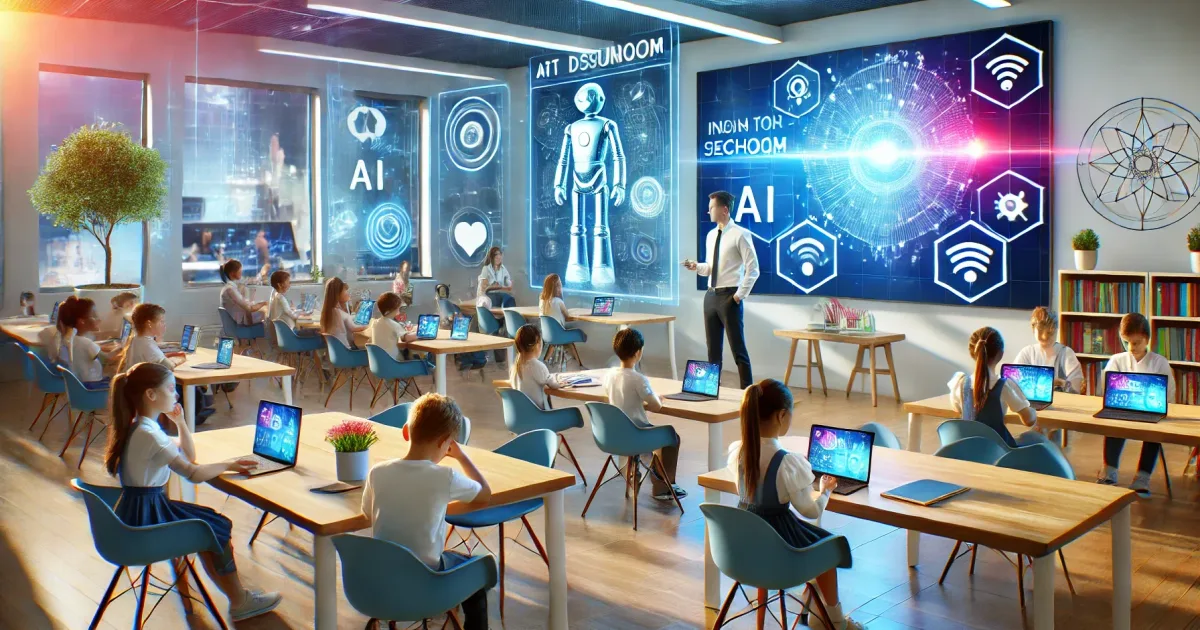
Saudi authorities announced three interconnected outputs in mid-2025: an AI curriculum taught across all general-education stages starting in the 2025-2026 academic year, a guideline for generative AI use addressed to students, teachers, and parents, and a national framework of nine dimensions to govern AI deployment in digital education. These steps fall under the Human Capability Development Program, one of the Vision 2030 realization programs. (Source: AI Education | Islamic University)
What is the new AI curriculum in Saudi schools?
According to Al-Jazirah newspaper citing the Saudi Press Agency (SPA) in July 2025, the new curriculum includes: specialized study units tailored to each age group, content delivered through interactive and applied methods, cognitive linkage mechanisms across stages to ensure skill accumulation, and integration of learning outcomes into the comprehensive student-performance evaluation system. The curriculum is the product of a partnership among the National Curriculum Center, the Ministry of Education, the Ministry of Communications and Information Technology, and the Saudi Data and AI Authority (SDAIA). Source: SPA (Source: Our Experience with Humain Chat | First Fully Saudi AI App - Arabhardware)
When did AI teaching start in schools?
A first phase preceded the comprehensive curriculum: in April 2025, SDAIA, in collaboration with the National Curriculum Center and the Ministry of Education, launched a course titled "Introduction to Artificial Intelligence" for twelfth-grade students in the general track, during the Human Capability Initiative Conference. The decision to roll out the curriculum across all stages from the 2025-2026 academic year followed. (Source: Manus Launches "Cue".. AI Agents Executing Tasks on Behalf of Users - Youm7)
| Step | Entity | Scope |
|---|---|---|
| "Introduction to Artificial Intelligence" course | SDAIA + National Curriculum Center + Ministry of Education | Twelfth grade, general track |
| Comprehensive AI curriculum | National Curriculum Center + Education + Communications + SDAIA | All general-education stages from 2025-2026 |
| Generative AI guideline | Ministry of Education + SDAIA | Students, teachers, and parents |
What does the Ministry of Education guideline say about generative AI?
The Ministry of Education, in cooperation with SDAIA, issued the guideline for generative AI use in general education. It aims to raise education quality ethically and responsibly while preserving the teacher's pivotal role. The guideline consists of three parts:
- Definition of generative AI, how it works, its benefits in education, and the principles underlying the guidelines.
- Usage guidelines in the educational process for students, teachers, and parents.
- Foundations of "prompt engineering" to steer generative AI tools and obtain better results.
The Ministry stated that the guideline's methodology aligns with SDAIA guidelines, the National Center for E-Learning, and the Ministry's e-learning policy, and that it drew on a comprehensive benchmarking exercise covering UNESCO, the OECD, and countries such as the United States, Australia, and New Zealand. Source: Ministry of Education
What is the AI framework in digital education?
The National Center for E-Learning launched a comprehensive framework for AI use in digital education, covering general, higher, vocational, and lifelong learning. The framework comprises nine dimensions:
- Leadership
- Curriculum design and content development
- Teaching and learning
- Assessment and performance monitoring
- Ethics and responsible use
- Technical standards, security, and data privacy
- Student support
- Professional development
- Evaluation and continuous improvement
The Center describes the framework as a guide for decision-makers and practitioners in deploying AI and advancing its use. Source: National Center for E-Learning
What is the difference between teaching AI and AI-powered personalized learning?
What has been officially announced is "teaching students AI" as a subject and curriculum. Transforming all curricula into AI-powered adaptive learning is not among the official announcements to date. Ongoing trials of AI solutions in classrooms remain experimental and do not yet constitute a binding general policy.
Key figures
- Comprehensive curriculum rollout: 2025-2026 academic year (Source: SPA)
- Target stages: All general-education stages (Source: SPA)
- National framework dimensions: 9 dimensions (Source: National Center for E-Learning)
- Guideline parts: 3 parts (Source: Ministry of Education)
- Partner entities for the curriculum: 4 government entities (Source: SPA)
Bottom line and what to watch
The curriculum, guideline, and framework are official, effective documents. Monitor the Ministry of Education, National Curriculum Center, and SDAIA websites for implementation-plan updates, particularly teacher-training programs for the new curriculum and National Center for E-Learning reports on framework application in the field. Field trials of AI personalization tools will later determine whether they become general policy or remain school-level options.