
أخبار السعوديةOriginal Report
Robots in Saudi Factories: The Fourth Industrial Revolution Realized
ع
عبدالله الدوسريرئيس التحرير وكاتب أول
||270 views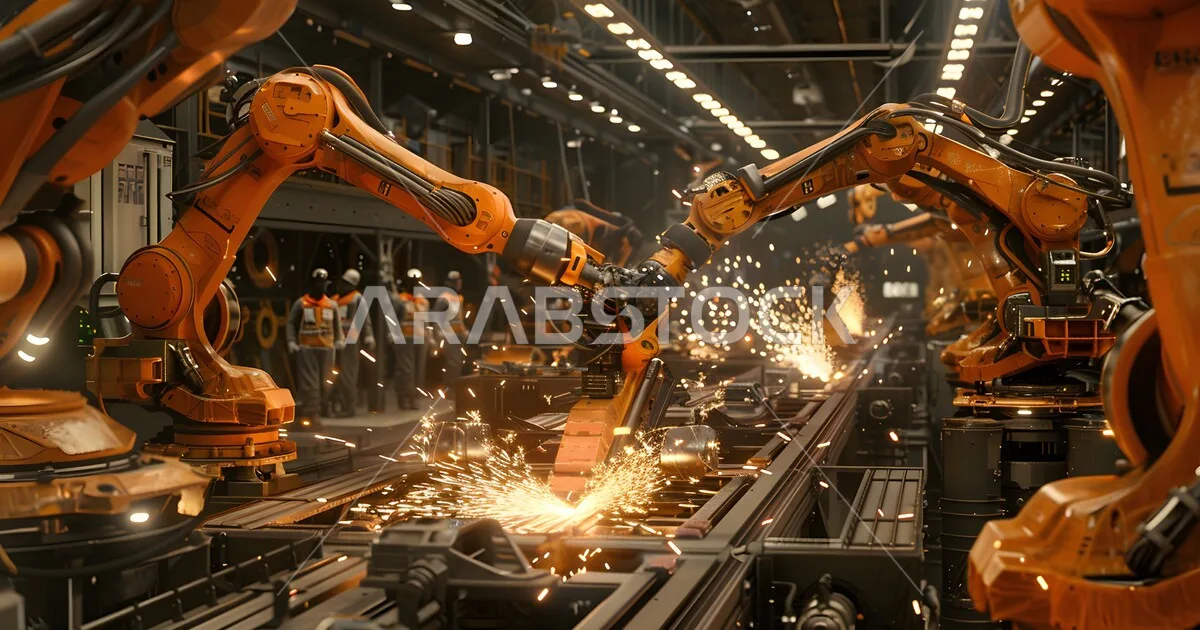
Introduction: Vision 2030 and Digital Transformation
With the entry into 2026, the Kingdom of Saudi Arabia is witnessing a qualitative leap in its industrial sector, where robots and automated systems have become the cornerstone in achieving the goals of Vision 2030. The use of robots in Saudi factories is no longer limited to small-scale experiments but has transformed into a comprehensive national strategy aimed at increasing productivity, enhancing quality, and attracting advanced technological investments.
Current Reality: Spread of Robots in Industrial Sectors
Data issued by the Saudi Data and Artificial Intelligence Authority (SDAIA) indicates that over 40% of major factories in the Kingdom have introduced advanced robotic systems into their production processes by 2026. These applications are concentrated in several key sectors:
- Petrochemical Industries: Use of robots for periodic inspections in high-risk areas, reducing human worker exposure to hazards.
- Automotive and Assembly Industry: Adoption of fully automated production lines in local assembly plants, especially with the expansion of investments in electric vehicle manufacturing.
- Food and Pharmaceutical Industries: Application of sterilization and packaging robots in sterile environments to ensure the highest standards of quality and safety.
- Textiles and Clothing: Use of automated cutting and sewing systems to increase precision and reduce waste.
Key Drivers of This Transformation
Several factors have contributed to accelerating the adoption of robots in Saudi factories:
- Government Support: Programs such as the National Industrial Development and Logistics Program (NDLP) offer financial incentives and facilities for companies investing in advanced technology.
- Focus on Industrial Safety: Robots have helped reduce industrial accident rates by up to 60% in some sectors, according to the Ministry of Industry and Mineral Resources.
- Demand for High Quality: As the Kingdom aims to export high-value-added industrial products, the precision provided by automated systems has become a critical factor in global competition.
- Shortage of Skilled Labor in Some Specializations: Robots have filled skill gaps in complex manufacturing processes.
Challenges and Opportunities
Despite successes, challenges still face this transformation:
- High Initial Costs: Especially for small and medium-sized enterprises.
- Need for Digital Infrastructure: Advanced robots require high-speed communication networks and intelligent control systems.
- Impact on the Labor Market: Reliance on machines has led to restructuring of some jobs, necessitating intensive retraining and rehabilitation programs.
On the other hand, this revolution creates new opportunities:
- Emergence of Jobs in Maintenance, Programming, and Analysis: Each robot requires specialized teams for supervision.
- Attracting Advanced Technology Investments: Saudi Arabia has become an attractive destination for global robotics companies such as ABB, KUKA, and FANUC.
- Enhancing Sustainability: Robots help improve energy and raw material efficiency.
Case Studies: Inspiring Successes
1. Advanced 'SABIC' Factory: The Saudi Basic Industries Corporation (SABIC) introduced a robotic system