
Ramadan 2026 in Saudi Arabia: What Changed Digitally at the Two Holy Mosques
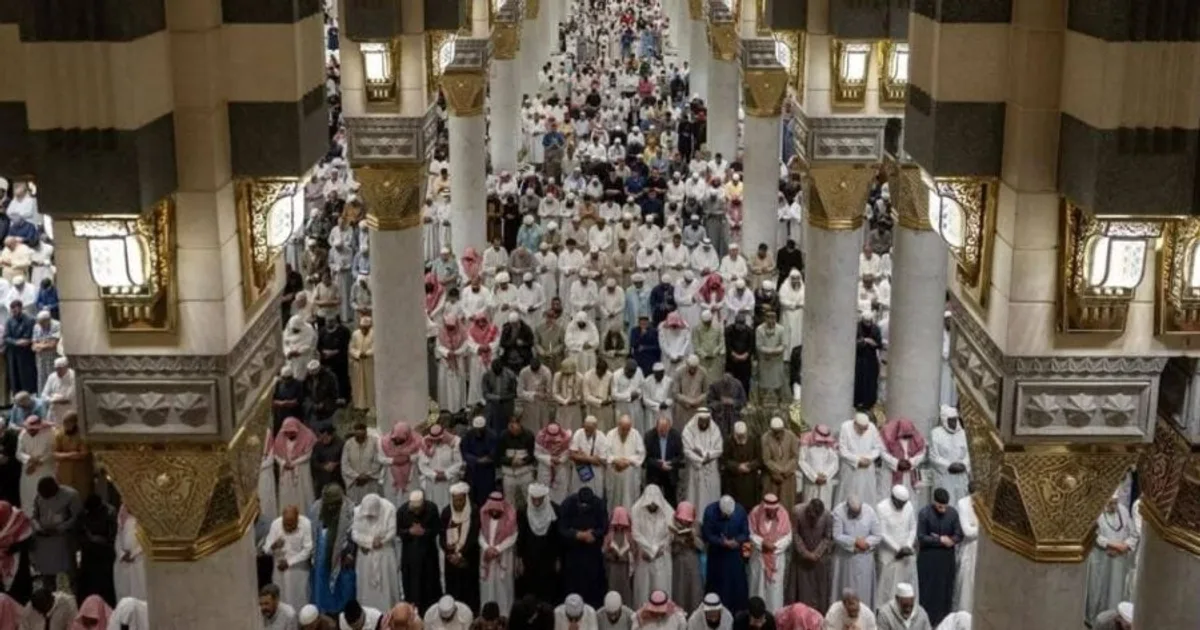
During Ramadan 1447 AH (February–March 2026), the General Authority for the Care of the Affairs of the Grand Mosque and the Prophet’s Mosque launched a trial phase of an interactive smart-mapping system inside the Two Holy Mosques. The platform covers more than 950 points of interest across 13 service categories, backed by more than 650 QR codes, and generates more than one hundred thousand dynamic routes that adapt to crowd movements. (source: Okaz)
What interactive maps were launched at the Two Holy Mosques?
Authority CEO Eng. Ghazi bin Zafer Al-Shahrani inaugurated the system, describing it as a leap in spatial guidance fed by operational data linked to control rooms. According to the Saudi Press Agency (SPA), the system includes: (source: Al-Waeam)
- More than 950 points of interest across 13 service categories.
- More than 650 QR codes placed throughout the Two Holy Mosques.
- Generation of more than one hundred thousand dynamic routes that improve automatically with crowd flow.
- Guidance to the optimal route when densities or temporary closures occur.
- Support for location-tagged incident reports and faster access to electric carts via ticket number.
Deputy CEO for Digital Transformation Dr. Mohammed Al-Saqr clarified that the Ramadan release is a trial phase, integrated with the color-coding and metric-addressing framework that divides the Two Holy Mosques into geographic zones, and that additional use cases are being developed throughout 2026. (source: Okaz)
What other digital services were available at the Two Holy Mosques during Ramadan 1447 AH?
Ahead of the 27th night, the Authority listed operational and digital services, as reported by SPA in its plan for Laylat al-Qadr:
- 3D maps: Show worshippers multiple routes to facilities and prayer areas so they can choose.
- "Where Are We" cards: Barcode tags that pinpoint a visitor’s location inside the Two Holy Mosques.
- Restroom-density screens: Displays at entrances show congestion levels by color, powered by IoT, directing visitors to less crowded facilities.
- Digital worshipper guide: Activated across various prayer halls.
- Roving teams with instant-translation devices: Assisting visitors of different nationalities.
- Hotel shuttles: Cart transport from central-area hotels to the Grand Mosque, with two dedicated routes for the Mosque’s electric carts.
Notably, the Authority used the phrase "for the first time" only for the activation of guest-care centers for guidance and support, not for the entire digital Ramadan program.
How many visitors came to the Two Holy Mosques in Ramadan 2026?
The Authority announced that total visits reached 96,638,865 from 1 to 20 Ramadan 1447 AH, according to Al-Yaum newspaper citing SPA. This metric counts total entries to prayer areas and Umrah, not unique individuals.
| Indicator (1–20 Ramadan 1447 AH) | Count |
|---|---|
| Grand Mosque worshippers (obligatory & night prayers) | 57,595,401 |
| Umrah performers | 15,605,086 |
| Prophet’s Mosque worshippers | 21,143,259 |
| Worshippers in the Rawdah | 579,191 |
| Visitors offering salutations to the Prophet ♥ and his two companions | 1,715,928 |
| Total | 96,638,865 |
How did the surge affect telecom networks?
Mid-Ramadan, stc Group disclosed via SPA that internet data traffic rose more than 21% at the Grand Mosque and more than 40% at the Prophet’s Mosque compared with the previous year. Over 48% of traffic in both mosques ran on 5G. The company said it upgraded more than 600 towers in Makkah and more than 470 in Madinah ahead of the season, and that international roaming customers among Umrah performers increased by more than 10%.
How can you use these tools during your visit?
- Scan any QR code posted in the Two Holy Mosques to open the interactive map.
- Select your destination (prayer area, facilities, restrooms, electric carts).
- Follow the dynamic route that adjusts for densities and temporary closures.
- Use location-tagged reporting to flag any observation.
- For an electric cart: enter your ticket number in the map to speed up dispatch.
Key figures at a glance
- Total visits (1–20 Ramadan 1447 AH): 96,638,865 (source: Al-Yaum via SPA)
- Points of interest on interactive maps: More than 950 (source: SPA)
- QR codes in the Two Holy Mosques: More than 650 (source: SPA)
- Dynamic routes: More than one hundred thousand (source: SPA)
- Data-traffic increase (Grand Mosque): More than 21% (source: stc via SPA)
- Data-traffic increase (Prophet’s Mosque): More than 40% (source: stc via SPA)
- Traffic on 5G: More than 48% (source: stc via SPA)
- Upgraded towers (Makkah): More than 600 (source: stc via SPA)
- Upgraded towers (Madinah): More than 470 (source: stc via SPA)
Bottom line and what to watch
The interactive maps remain in trial phase, with the Authority developing additional use cases through 2026. Follow SPA and the General Authority for the Care of the Affairs of the Grand Mosque and the Prophet’s Mosque for announcements on when the service moves from trial to permanent and what new features—such as integration with personal navigation apps—are added. If you plan Umrah in upcoming seasons, try scanning the QR codes when you enter the Mosque to familiarize yourself with the system early.