
Saudi Schools Expand Blended Learning Programs Through Virtual Reality Platforms: A Shift Towards Interactive and Inclusive Educational Experiences
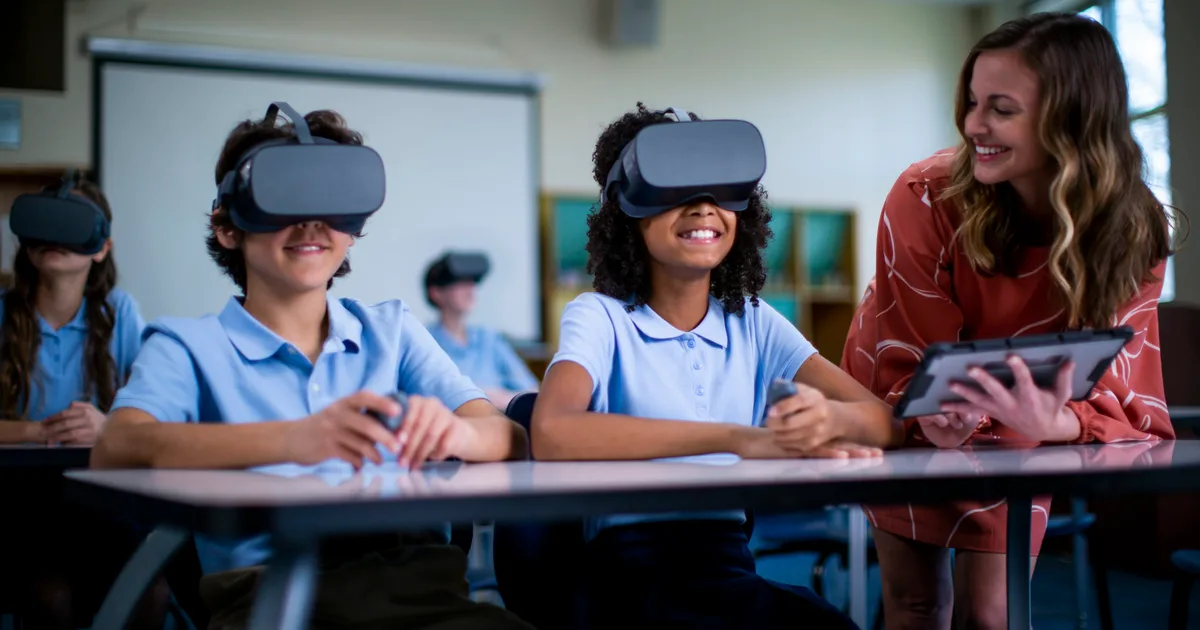
In 2026, Saudi schools are witnessing a radical transformation in traditional teaching methods, as a recent report from the Ministry of Education shows that 65% of public and private schools in the Kingdom have begun integrating Virtual Reality (VR) platforms into blended learning programs, raising student engagement to 80% compared to traditional methods. This shift is not merely a technological advancement but represents a qualitative leap in Saudi Arabia's educational journey towards achieving Vision 2030, which aims to build an innovative education system that competes globally.
Blended learning programs via VR platforms in Saudi schools are an educational strategy that combines traditional face-to-face teaching with interactive digital learning using VR technologies, creating immersive and personalized educational experiences that enhance deep understanding and stimulate student creativity. This approach enables students to explore complex concepts in safe simulation environments, such as virtual science experiments or interactive historical trips, achieving Vision 2030's goals of improving educational outcomes.
What is Blended Learning via Virtual Reality Platforms in the Saudi Context?
Blended Learning in the Kingdom of Saudi Arabia refers to the integration of traditional teaching methods with modern digital technologies, such as VR platforms, to enhance the learning experience. In this model, students use VR devices like Oculus or HTC Vive headsets to enter interactive virtual classrooms, where they can, for example, explore the human body in three-dimensional detail in science classes or visit historical Saudi sites like Madain Saleh in social studies. According to data from the Education and Training Evaluation Commission, 70% of teachers who used this technology reported a noticeable improvement in students' comprehension of abstract concepts.
How Do Virtual Reality Platforms Improve Educational Experiences in Saudi Schools?
Virtual Reality platforms improve educational experiences by providing immersive and interactive learning environments. In mathematics, students can manipulate virtual geometric shapes to better understand properties, while in English, they can practice conversations with virtual characters to enhance speaking skills. A study conducted by King Saud University showed that using VR in education increases information retention rates by 40% compared to traditional methods. Additionally, these platforms allow content customization according to each student's needs, supporting inclusive education, especially for students with special needs who can participate in activities that might be difficult in the real world.
Why is This Expansion Important for Achieving Vision 2030 in Saudi Education?
The expansion of blended learning programs via VR is important for achieving Vision 2030 because it enhances innovation and quality in the education system, one of the vision's main objectives. Through these technologies, Saudi schools prepare students for future skills, such as critical thinking and digital collaboration, contributing to building a knowledge-based economy. According to a report from the Digital Transformation Center at the Ministry of Education, investment in VR is expected to reduce educational material costs by 30% in the long term, by reducing the need for expensive physical laboratories and equipment. This expansion also supports the Kingdom's digital transformation strategy, which aims to improve the efficiency of public services.
Do Saudi Schools Face Challenges in Implementing These Programs?
Yes, Saudi schools face challenges in implementing blended learning programs via VR, despite notable progress. These challenges include the high cost of devices and software, with the cost of equipping a single classroom with VR devices averaging 50,000 Saudi Riyals, according to data from the Saudi Educational Technology Development Company. Additionally, there is a need to train teachers to use these technologies effectively, as 45% of teachers in a survey by the Education and Training Evaluation Commission reported needing more technical support. Furthermore, there are health concerns, such as eye strain from prolonged use, requiring clear guidelines for safe usage.
What Are the Key Projects and Supporting Entities for This Expansion in Saudi Arabia?
Several Saudi entities support this expansion, most notably the Ministry of Education, which launched the "School of the Future" initiative to integrate VR into 1,000 schools by 2027. The Education and Training Evaluation Commission also participates in setting quality standards for these programs. At the project level, the "VR Education" project in Riyadh, in partnership with stc, is one of the most prominent initiatives, aiming to provide virtual educational content for science and mathematics subjects. According to ministry statistics, 40% of schools in remote areas have begun benefiting from these projects, helping to reduce the educational gap between urban and rural areas.
How Will This Expansion Impact the Future of Education in Saudi Arabia by 2030?
The expansion of blended learning programs via VR will significantly impact the future of education in Saudi Arabia by 2030, making learning more personalized and interactive. Experts expect these technologies to become an essential part of the curriculum, with the development of local content in Arabic that suits Saudi culture. For example, virtual trips to heritage sites like Historic Diriyah can be created to enhance national identity. It is expected that the percentage of schools using VR will rise to 90% by 2030, according to predictions from the Digital Transformation Center, contributing to improving the Kingdom's ranking in global educational indicators.
What Are the Recommendations for Saudi Schools to Successfully Implement These Programs?
To successfully implement blended learning programs via VR, relevant authorities advise Saudi schools to follow practical steps. First, start with small pilot projects to measure effectiveness before expansion, as some schools in Jeddah have done. Second, invest in teacher training through programs like those offered by the Training Academy affiliated with the Ministry of Education. Third, collaborate with local technology companies, such as the Saudi Educational Technology Development Company, to develop affordable solutions. Finally, monitor the impact of VR on student outcomes using digital assessment tools to ensure educational goals are met. According to previous experiences, schools that applied these recommendations saw a 25% increase in student scores on national tests.
In conclusion, the expansion of blended learning programs via Virtual Reality platforms in Saudi schools represents a strategic shift towards more interactive and inclusive educational experiences, supporting Vision 2030 in building an innovative generation capable of competing globally. With continuous advancements in digital technologies, these tools are expected to become more integrated into school life, opening new horizons for lifelong learning.