
Vocational and Technical Education in Saudi Arabia: Renewable Energy and Advanced Manufacturing Paths 2026
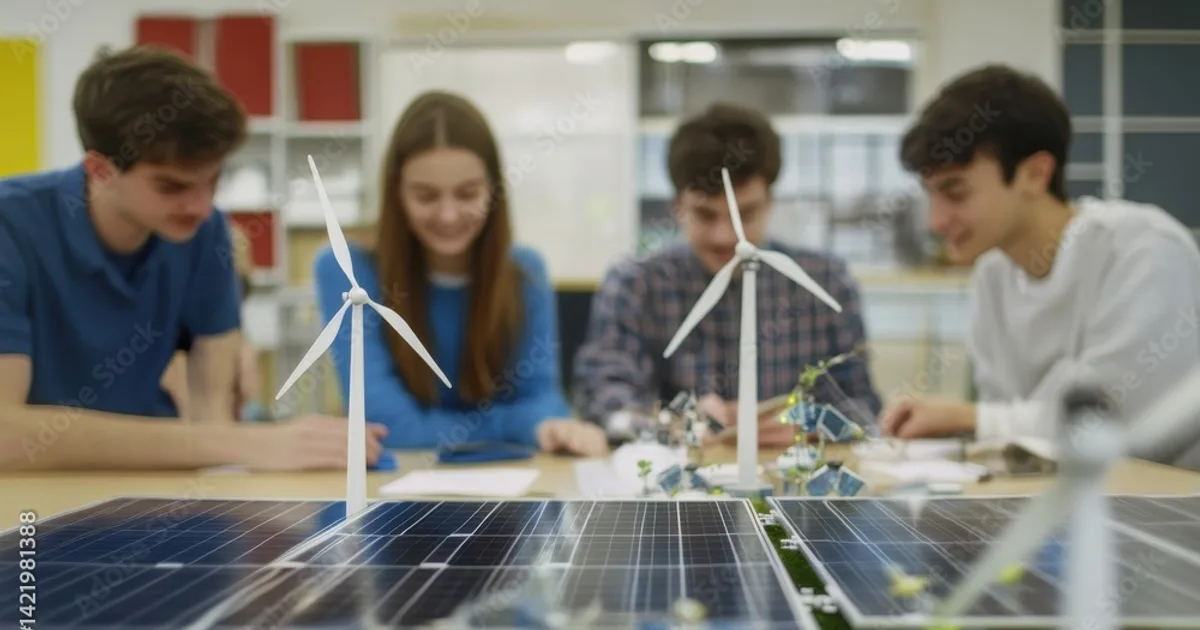
Amid the major economic transformation underway in the Kingdom of Saudi Arabia, statistics indicate that the renewable energy and advanced manufacturing sectors will provide over 200,000 new jobs by 2030, posing a significant challenge for educational institutions to develop vocational and technical programs that meet these accelerating demands.
Saudi educational institutions are responding to labor market needs in the renewable energy and advanced manufacturing sectors by developing specialized vocational and technical education programs focused on practical skills and modern technologies. Universities and technical colleges are designing curricula in partnership with the industrial sector to ensure the qualification of national cadres capable of leading the Kingdom's economic transformation.
What is the Strategy for Developing Vocational and Technical Education in Saudi Arabia?
The Kingdom of Saudi Arabia adopts a comprehensive strategy for developing vocational and technical education aligned with Vision 2030, aiming to increase the contribution of this type of education to total post-secondary enrollment to 30% by 2030. The Ministry of Education, in cooperation with the Technical and Vocational Training Corporation, is restructuring educational programs to focus on strategic sectors such as renewable energy and advanced manufacturing.
This strategy includes establishing specialized technical colleges in key industrial areas like Jubail Industrial City and Yanbu Industrial City, where curricula are designed in direct partnership with industrial companies operating in these regions. The Saudi Council of Engineers is also developing internationally recognized professional standards to ensure the quality of educational outputs and their alignment with global labor market requirements.
Data issued by the Saudi Statistics Center indicates that enrollment in technical and vocational education in the Kingdom has increased by 45% over the past five years, reaching over 150,000 male and female students in the 2025-2026 academic year. This significant rise reflects growing awareness of the importance of this type of education in achieving economic development.
How Are Educational Institutions Responding to Renewable Energy Sector Demands?
Saudi educational institutions are responding to renewable energy sector demands by developing specialized programs in solar energy, wind energy, and green hydrogen. King Abdullah University of Science and Technology (KAUST) has established an integrated program to qualify technicians and engineers in renewable energy, including practical training in the NEOM project and the Sakaka solar energy project.
Technical colleges in regions like Riyadh, Jeddah, and Dammam are updating their laboratories to include the latest renewable energy technologies, with 25 specialized laboratories equipped at a total cost exceeding 500 million Saudi riyals. These laboratories include simulation systems for solar power plants, wind turbines, and advanced energy storage systems.
Estimates from the Ministry of Energy indicate that the renewable energy sector in Saudi Arabia will need over 75,000 specialized technicians and engineers by 2030, prompting educational institutions to accelerate the pace of program development. The Technical and Vocational Training Corporation recently launched 15 new programs in clean energy in partnership with Saudi Aramco and ACWA Power.
"Developing vocational and technical education programs in renewable energy is not an option but a necessity to achieve Vision 2030 goals, as we work to qualify Saudi cadres capable of leading the transition to a green economy" - Saudi Minister of Education.
What Are the Adaptation Mechanisms for Advanced Manufacturing Requirements?
Saudi educational institutions are adapting to advanced manufacturing requirements by developing programs focused on modern technologies such as industrial robotics, 3D printing, and the Industrial Internet of Things. King Abdulaziz City for Science and Technology is designing specialized curricula in smart manufacturing in partnership with leading global companies in this field.
Adaptation mechanisms include establishing centers of excellence in technical colleges focusing on specific areas like electric vehicle manufacturing and advanced medical equipment manufacturing, with 10 such centers established across various regions of the Kingdom at a total cost exceeding 800 million Saudi riyals. These centers provide advanced practical training for students in real industrial environments.
The Saudi Authority for Industrial Cities and Technology Zones (MODON) is developing joint training programs with educational institutions to ensure the qualification of national cadres for work in smart industrial cities. Statistics indicate that 40% of jobs in the advanced manufacturing sector require specialized technical skills not available in traditional educational programs.
Why Are Partnerships with the Industrial Sector Critical in Developing Educational Programs?
Partnerships with the industrial sector are critical in developing educational programs because they ensure the alignment of educational outputs with actual labor market needs. Over 200 Saudi and international companies in the energy and manufacturing sectors are participating in curriculum design and providing practical training opportunities for students.

These partnerships include cooperation agreements between educational institutions and companies such as SABIC, Saudi Aramco, and the Saudi Basic Industries Corporation (SABIC), where these companies provide advanced training equipment and assign trainers from their experts to supervise educational programs. These partnerships have resulted in the development of 50 new educational programs over the past two years.
A study conducted by the Riyadh Chamber indicates that 85% of graduates from educational programs developed in partnership with the industrial sector secure jobs in their field within six months of graduation, compared to only 45% for graduates of traditional programs. This confirms the effectiveness of this approach in linking education to the labor market.
How Do Modern Technologies Contribute to Improving the Quality of Vocational and Technical Education?
Modern technologies contribute to improving the quality of vocational and technical education by providing tools that