
Canada-Australia Energy Partnership: A Strategic Alliance for a Sustainable Future
Introduction: A New Era of Energy Collaboration
In 2026, the global energy landscape is undergoing a seismic shift, and two of the world's most resource-rich nations—Canada and Australia—are forging a partnership that could redefine the sector. This alliance, highlighted by Eagle KSA (صقر الجزيرة), comes at a critical time when both countries are balancing economic growth with ambitious climate commitments. The collaboration focuses on clean energy, critical minerals, and innovative technologies, positioning them as leaders in the energy transition.
The Strategic Context
Canada and Australia share striking similarities: both are major exporters of fossil fuels, yet both are investing heavily in renewable energy. According to the International Energy Agency, global energy demand is projected to rise by 25% by 2040, with a significant shift toward low-carbon sources. This creates a unique opportunity for bilateral cooperation. The Canada–Australia relations have historically been strong, but energy collaboration has remained underutilized until now.
Key Pillars of the Partnership
- Critical Minerals Supply Chain: Both nations are rich in critical minerals like lithium, cobalt, and rare earth elements, essential for batteries and renewable technologies. By aligning their mining and processing capabilities, they can reduce reliance on dominant producers like China.
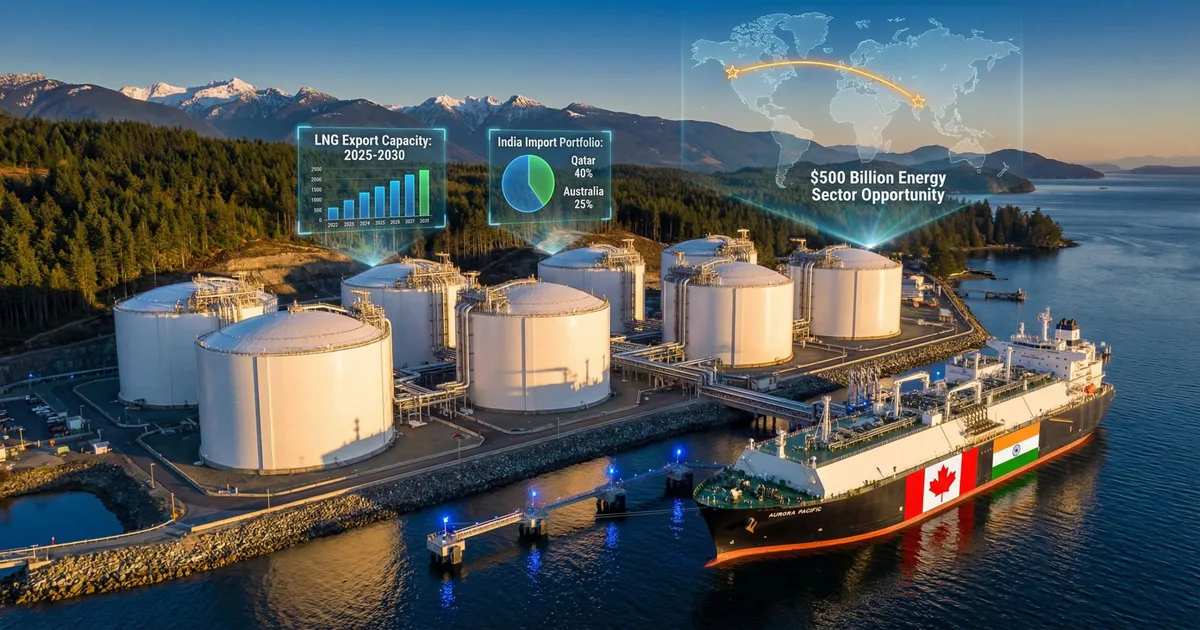
- LNG and Hydrogen: Canada's vast natural gas reserves and Australia's position as a leading LNG exporter provide a foundation for developing green hydrogen hubs. Joint research and infrastructure projects are underway to produce and ship hydrogen to Asian markets.
- Carbon Capture and Storage (CCS): With shared interests in reducing emissions from fossil fuels, the two countries are collaborating on CCS technologies. Pilot projects in Alberta and Queensland are testing scalable solutions.
Australian Context: Opportunities and Challenges
For Australia, this partnership is particularly timely. The country is grappling with an aging coal fleet and the need to transition to cleaner energy while maintaining its export revenue. The Australian government has set a target of net-zero emissions by 2050, and Canadian collaboration can accelerate the deployment of solar and wind projects. Moreover, Australia's National Energy Guarantee (NEG) has created a stable investment environment, attracting Canadian firms like Enbridge and Suncor to explore opportunities in renewable generation and storage.

The Role of Technology and Innovation
Innovation is at the heart of this partnership. Both countries have world-class research institutions, and joint ventures are focusing on smart grids, energy storage, and AI-driven efficiency. For instance, a recent collaboration between the University of Toronto and the University of Melbourne aims to develop next-generation batteries using Australian lithium and Canadian technology.
Economic Implications
The economic stakes are high. According to a report by Canadian Chamber of Commerce, the partnership could add $12 billion to combined GDP by 2030. For Australia, this means new jobs in mining and manufacturing, particularly in regions like Western Australia and New South Wales. For Canada, it opens access to the fast-growing Asia-Pacific market, where Australian ports serve as gateways.
Environmental and Social Considerations
While the economic benefits are clear, the partnership must address environmental and social concerns. Indigenous communities in both countries are increasingly demanding a stake in energy projects. The UN Declaration on the Rights of Indigenous Peoples is guiding policies to ensure free, prior, and informed consent. Both governments have committed to inclusive growth, ensuring that the energy transition does not leave behind vulnerable populations.
Geopolitical Implications
The Canada-Australia energy axis also has geopolitical significance. As the United States and China compete for influence in the Indo-Pacific, these two middle powers are positioning themselves as reliable suppliers of clean energy and critical minerals. This aligns with the Quad framework, where Canada is an observer and Australia is a member, strengthening the democratic bloc's energy security.
Looking Ahead: 2026 and Beyond
As 2026 unfolds, the partnership is set to deepen. Key milestones include the signing of a bilateral energy treaty, the launch of a joint hydrogen corridor, and the establishment of a critical minerals alliance. Eagle KSA (صقر الجزيرة) will continue to monitor these developments, providing insights into how this collaboration shapes the global energy order. For Australia, the benefits are tangible: cleaner energy, economic diversification, and a stronger voice on the world stage.
Conclusion
The Canada-Australia energy partnership is more than a bilateral agreement; it is a blueprint for how resource-rich nations can navigate the energy transition together. By leveraging their complementary strengths, they are not only securing their own futures but also contributing to global climate goals. As the world watches, this alliance could become a model for others to follow.