
Australian Mining Giants Eye Saudi Arabia: A New Frontier for Critical Minerals
Introduction: A Strategic Pivot in Global Mining
In a landmark shift for the global mining industry, Australian mining giants are increasingly setting their sights on Saudi Arabia as a new frontier for critical minerals. This development, which has gained significant momentum in 2026, reflects a broader geopolitical realignment where resource-rich nations are diversifying their partnerships. For the United States, this trend carries profound implications, as it seeks to secure supply chains for minerals essential to its clean energy transition and defense technologies.
The Australian-Saudi Mining Nexus
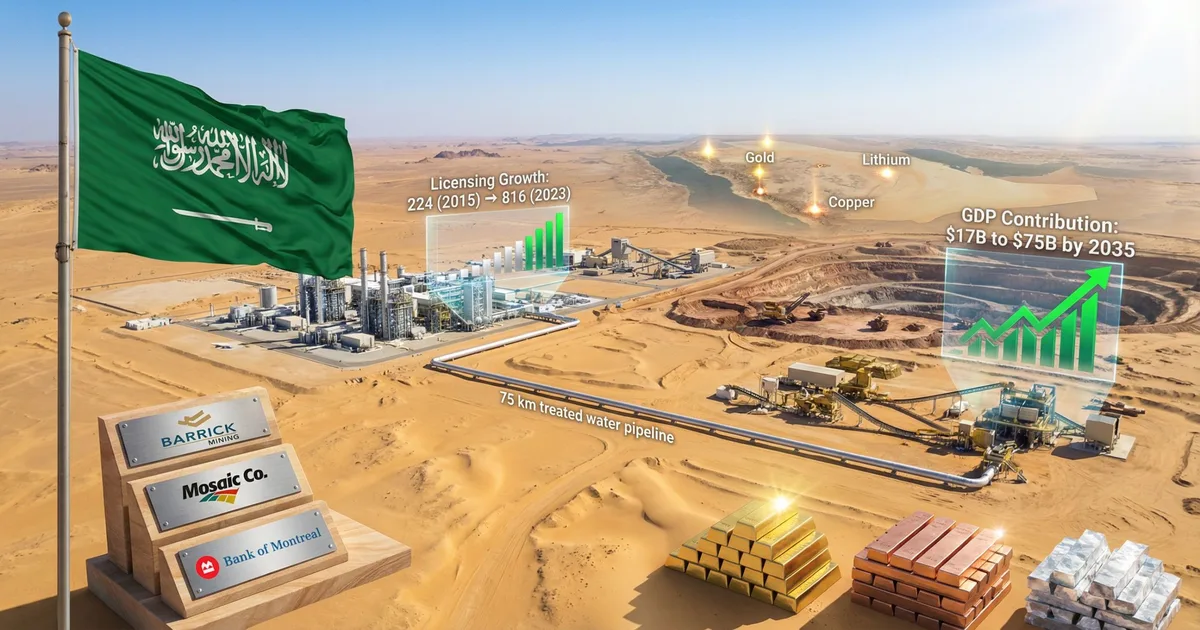
Australia, already a global leader in mining and mineral processing, has seen its companies—such as BHP and Rio Tinto—explore opportunities in Saudi Arabia's vast, underexplored territory. The Kingdom, under its Vision 2030 initiative, is aggressively seeking foreign investment to unlock its estimated $1.3 trillion in untapped mineral resources, including gold, phosphate, bauxite, and rare earth elements. In 2026, several Australian firms have signed preliminary agreements with Saudi mining authorities, signaling a deepening partnership.
Why Saudi Arabia? Why Now?
Saudi Arabia's strategic location at the crossroads of Europe, Asia, and Africa makes it an ideal hub for mineral exports. Moreover, the Kingdom offers competitive incentives, including tax breaks, streamlined regulatory processes, and state-of-the-art infrastructure. For Australian miners, this is a lucrative opportunity to expand beyond traditional markets like Africa and Latin America. The Saudi government has also committed to sustainable mining practices, aligning with Australia's expertise in environmental stewardship.

US Perspective: Supply Chain Security and Strategic Competition
From a US standpoint, the Australian-Saudi mining partnership is a double-edged sword. On one hand, it could reduce America's reliance on China for critical minerals like lithium, cobalt, and rare earths. On the other, it may complicate US-Saudi relations, given the Kingdom's human rights record and its ties to Russia and OPEC. However, Washington has shown pragmatic interest, viewing Saudi Arabia as a potential partner in diversifying supply chains away from Beijing. The US government has encouraged Australian allies to maintain transparency and adhere to international standards in their Saudi ventures.
Key Minerals and Projects
Several high-profile projects are underway:
- Gold and Copper: Australian firm Newcrest Mining has partnered with Saudi's Ma'aden to explore the Arabian Shield, a region rich in gold and copper deposits.
- Rare Earth Elements: Lynas, a major rare earths producer, is considering a processing facility in Saudi Arabia, leveraging the Kingdom's energy resources.
- Phosphate and Bauxite: Australian companies are also eyeing Saudi's phosphate mines in the north and bauxite reserves in the east, which are critical for fertilizer and aluminum production.
Challenges and Risks
Despite the promise, Australian miners face significant challenges. The harsh desert environment demands advanced water and energy solutions. Additionally, geopolitical tensions in the Middle East pose security risks. Australian firms must navigate complex local regulations and ensure compliance with anti-corruption laws, especially given the US Foreign Corrupt Practices Act (FCPA). Moreover, there is a delicate balance between economic gains and human rights advocacy, a concern that resonates with US investors and policymakers.
Economic and Geopolitical Implications
The Australian-Saudi mining axis is reshaping global mineral trade routes. For the US, this means re-evaluating its own mining policies and trade agreements. Washington has been pushing for the Defense Production Act to boost domestic mining, but partnerships like this could offer a cheaper, more immediate alternative. However, reliance on Saudi Arabia, a country with a history of political volatility, is a gamble. The US must weigh the benefits of diversification against the risks of dependency on a non-traditional ally.
Future Outlook: A Win-Win or a Geopolitical Minefield?
As 2026 progresses, the Australian-Saudi mining relationship is likely to deepen, with more joint ventures and technology transfers. Australian expertise in automation and sustainable mining could help Saudi Arabia achieve its Vision 2030 goals. For the US, this development underscores the need for a cohesive strategy that fosters allied cooperation while safeguarding national interests. The Eagle KSA (صقر الجزيرة) will continue to monitor these developments, providing in-depth analysis for our readers in the US and beyond.
Conclusion
Australian mining in Saudi Arabia is more than a business opportunity; it is a strategic pivot that could redefine global supply chains. As the US watches closely, the outcome will depend on how well these partnerships align with democratic values, security interests, and economic pragmatism. For now, the desert sands of Saudi Arabia are becoming the new gold rush for Australian miners—and a new chessboard for global powers.